If you're shopping for a baby monitor twins one tracheostomy setup, you need two clear video feeds, fast audio, and a system that complements (never replaces) the clinical pulse-ox or apnea monitor your pulmonology team prescribed. In 2026, the strongest picks pair a dual-camera consumer monitor for visual coverage of both cribs with either a wearable sock-style vitals tracker on the non-trach twin or a second camera mounted at trach-stoma level so you can see the tube site, chest rise, and any secretions without entering the room. Below we break down which products actually work for medically complex twins, what to avoid, and how to layer your monitoring safely.
Why standard baby monitors aren't enough for a trach baby
Top Picks
A tracheostomy tube bypasses the upper airway, which means accidental decannulation, mucus plugging, or a dislodged Y-connector can become emergencies in under a minute. Your hospital discharge team almost certainly sent you home with a pulse oximeter and possibly an apnea monitor — those are the primary safety devices. Consumer baby monitors serve a different job: they let you see both twins simultaneously, hear small sounds like a wet cough or stridor, and respond before alarms ever fire. For a baby monitor twins one tracheostomy nursery, that visual layer is the whole point. You need to glance at the screen or your phone and instantly confirm chest rise, tube position, and that the non-trach twin hasn't rolled into the trach twin's tubing.
That changes the buying criteria from "cute features" to: dual-camera support, high-resolution night vision, a screen big enough to split, pan-tilt-zoom so you can check the stoma site closely, and either a long-life parent unit or a reliable app that won't drop the feed when your Wi-Fi hiccups.
Quick comparison: top picks for a trach-and-twin nursery in 2026
| Monitor | Cameras included | Wi-Fi required | Best for | Vitals tracking |
|---|---|---|---|---|
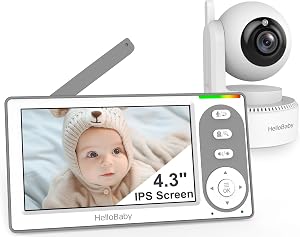
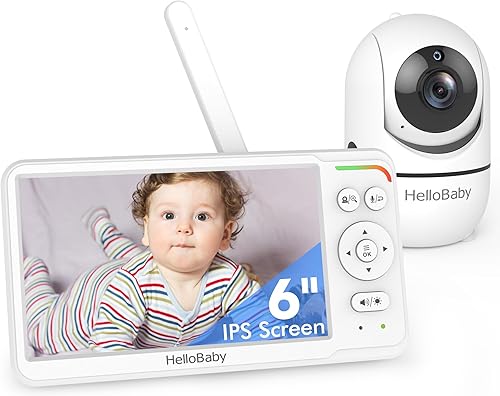
| HelloBaby 5-inch, 2 Cameras | 2 | No | Out-of-the-box twin coverage on a budget | None |
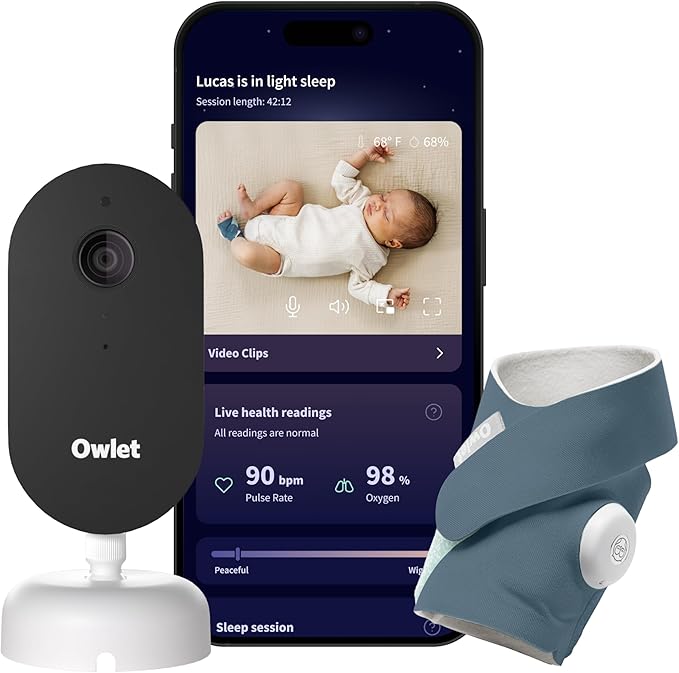
| Owlet Dream Duo (Gen 3) | 1 camera + Dream Sock | Yes | Heart rate & oxygen tracking on the non-trach twin | HR + SpO2 (wellness) |
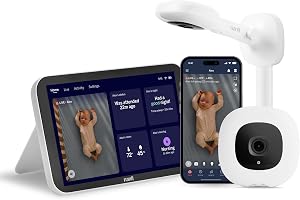
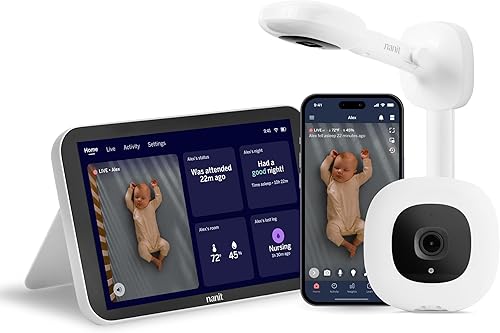
| Nanit Pro 1080p | 1 (expandable) | Yes | HD overhead view, breathing motion via Breathing Wear | Breathing motion |
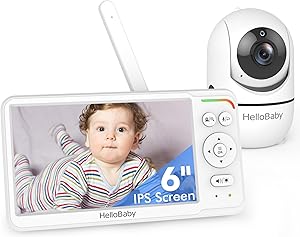
| HelloBaby No-WiFi PTZ 5-inch | 1 (supports 2) | No | Local-only feed for trach-side close-ups | None |
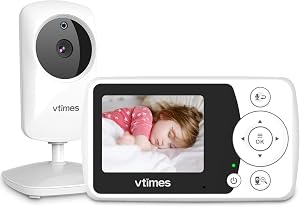
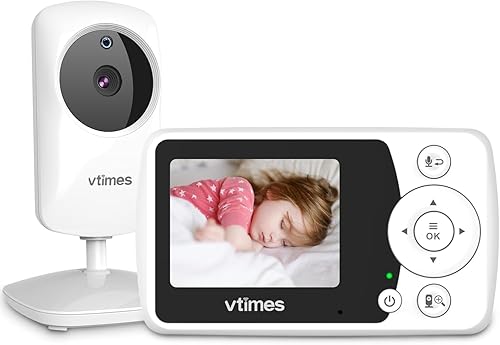
| GoodBaby No-WiFi PTZ | 1 (supports 2) | No | Reliable secondary feed with strong pan-tilt | None |
Our recommended setups
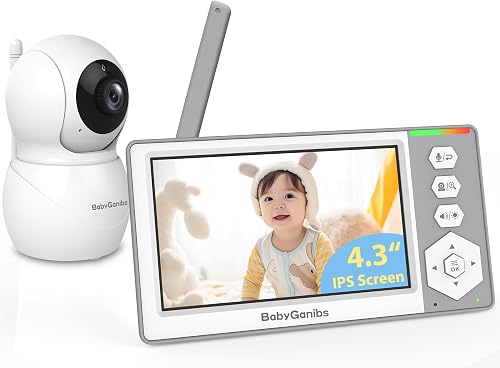
Best dual-camera starter: HelloBaby 5-inch, 2 Cameras, 30-Hour Battery
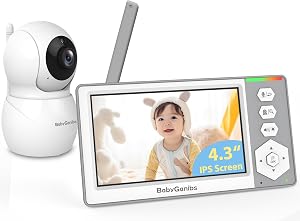
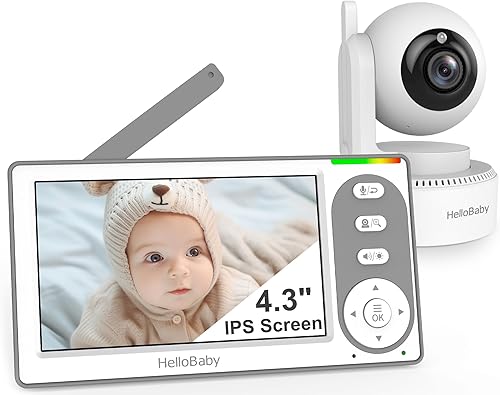
For most families managing twins where one has a tracheostomy, this is the simplest day-one purchase. You get two matched cameras in the box, a split-view 5-inch screen so you can see both cribs at once, and a parent unit that runs roughly 30 hours per charge in audio-only mode. Critically for trach families, it operates on a closed FHSS radio link — not Wi-Fi — which means a router outage or ISP issue cannot blind you to either baby. The screen is bright enough to keep on your nightstand all night without checking a phone. Mount one camera overhead of the non-trach twin and the second angled at the trach twin's chest and face so you can verify the tube and chest rise at a glance. Check the HelloBaby 2-camera kit on Amazon.
Best for tracking the healthy twin's vitals: Owlet Dream Duo (Gen 3)
The trach twin will already be on hospital-grade pulse oximetry, so adding another consumer SpO2 device there is redundant (and the medical team will tell you which leads and probes to trust). What the Dream Duo solves is the other question that wakes trach parents up at 3 a.m.: "Is the well twin okay?" The Dream Sock tracks heart rate and oxygen as wellness data and pushes notifications if readings leave preset zones, and the 2K HD camera gives you a sharp video feed of that crib. Many NICU-graduate families use the sock on the non-trach sibling for peace of mind, then layer a separate plain video camera over the trach twin. See the Owlet Dream Duo on Amazon.
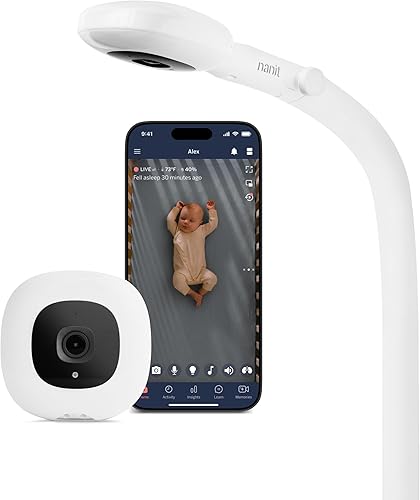
Best HD overhead view: Nanit Pro Smart Baby Monitor with Floor Stand
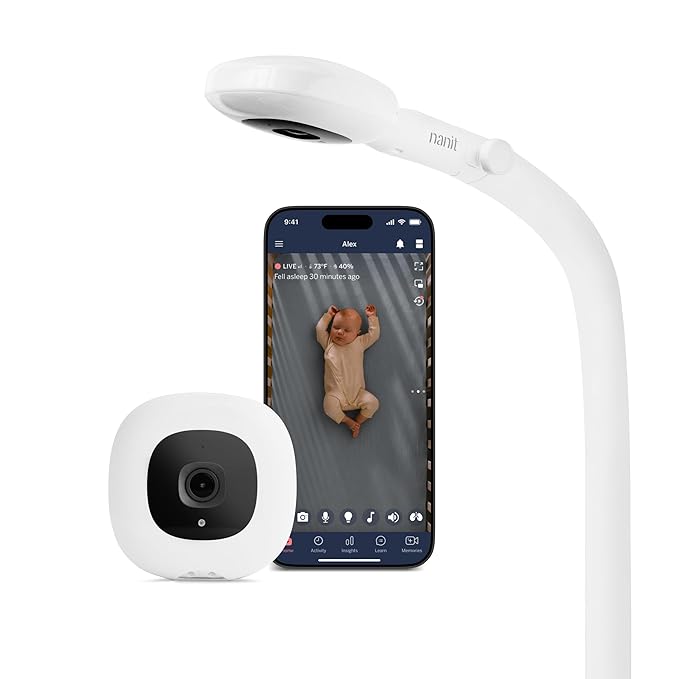
Nanit's overhead-mounted 1080p camera produces the cleanest top-down view of a crib on the market, which matters more than it sounds: when one twin has a trach, you want to instantly see whether the tubing is kinked, whether the HME (heat-moisture exchanger) is still attached, and whether the sibling has reached across. The floor stand version avoids drilling into the wall and is easier to reposition between cribs. Pair the Nanit Pro with Breathing Wear on the non-trach twin to monitor respiratory motion without a wearable on the skin — useful when you've already got a stoma, dressing, and pulse-ox probe taking up real estate on the trach baby. Add a second Nanit camera or a no-Wi-Fi camera over the second crib. View the Nanit Pro on Amazon.
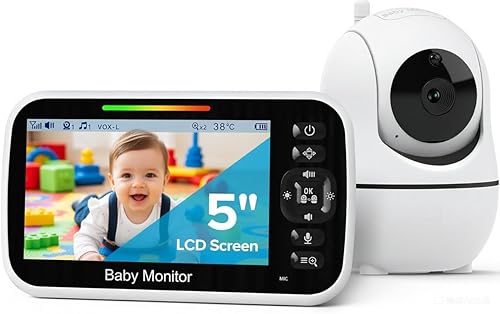
Best Wi-Fi-free close-up for the trach twin: HelloBaby No-WiFi PTZ 5-inch
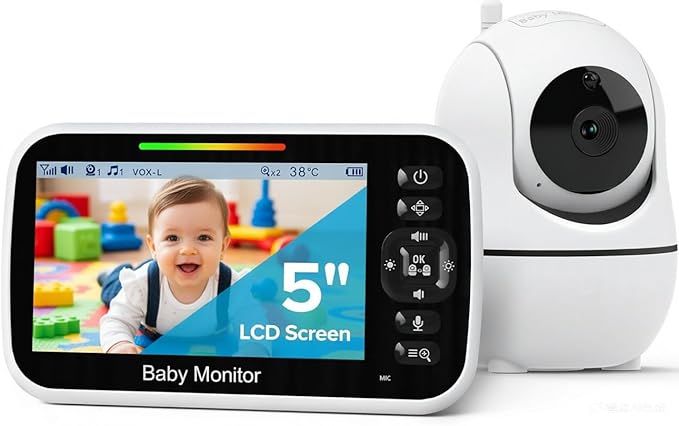
Many ENT and pulmonology teams quietly recommend at least one fully offline camera in a trach nursery. Routers fail, firmware updates push at 2 a.m., and any cloud monitor is one outage away from a black screen. The HelloBaby No-WiFi PTZ gives you remote pan, tilt, and zoom from the parent unit so you can sweep from the trach site up to the face and verify the tube without standing up. The 30-hour battery means a power blip in the nursery doesn't kill your view. Use it as your primary trach-twin camera and pair it with any of the Wi-Fi monitors above for the second crib. Check the HelloBaby No-WiFi PTZ on Amazon.
Best secondary PTZ for redundancy: GoodBaby No-WiFi PTZ
If you want a third camera — common when one twin has a trach because parents add a dedicated suction-station or doorway view — the GoodBaby No-WiFi PTZ is an inexpensive, reliable add-on with strong pan-tilt range. It runs on its own radio link, so it won't compete with your Nanit or Owlet on the 2.4 GHz Wi-Fi band, which reduces dropouts. Several trach parents use this one specifically angled at the ventilator or HME shelf so they can confirm circuit position without going in. See the GoodBaby PTZ on Amazon.
How to layer your monitoring for a baby monitor twins one tracheostomy setup
Think in three layers, in this order of priority:
- Medical layer (non-negotiable): the hospital-issued pulse oximeter on the trach twin, plus any apnea monitor or vent alarms. These are the alarms that wake you for a true emergency.
- Visual layer: dual cameras — one per crib — with at least one offering pan-tilt-zoom for the trach baby. Position the trach camera so the tube, neck plate, and chest are all in frame.
- Wellness layer (optional): a Dream Sock or Nanit Breathing Wear on the non-trach twin so you aren't flying blind on the sibling while you're focused on the trach side.
For more on building a complete nursery setup, see our guides to monitors for NICU graduates and the best baby monitor for twins. If you also need help with placement and sight lines, our camera placement guide covers crib-side angles for medically complex infants.
Features that actually matter for a trach-twin nursery
- Split-screen or true dual feed: Toggling between cameras every few seconds is not safe when one twin has an airway device. You need both feeds visible at once.
- Crisp night vision: You're checking for skin color, secretions around the stoma, and whether the HME is still in place. 720p night vision is borderline; 1080p or 2K is much better.
- Two-way audio: Useful for soothing the non-trach twin without disturbing the trach baby's settling routine.
- Local-only fallback: At least one camera should work without internet. This is the single most overlooked feature for medically complex families.
- Long battery on the parent unit: When you're up doing suctioning or trach care at 3 a.m., you don't want to find the parent unit dead.
- PTZ control: Pan-tilt-zoom lets you inspect the stoma site closely without entering the room and waking either twin.
What to avoid
Skip any monitor that markets itself as a medical SpO2 device for a trach baby — the prescribed hospital pulse oximeter is the only thing that should be making those decisions. Skip Wi-Fi-only systems as your sole monitor; pair them with a non-Wi-Fi camera. And skip single-camera monitors that promise to "cover both cribs from one angle" — they can't show you the stoma site detail you need on the trach twin.
Frequently Asked Questions
Can a baby monitor replace a pulse oximeter for a baby with a trach?
No. Consumer monitors — including the Owlet Dream Sock and Nanit Breathing Wear — are wellness devices, not medical-grade pulse oximeters or apnea monitors. A child with a tracheostomy needs the hospital-prescribed pulse-ox and any vent or apnea alarms running at all times. The baby monitor adds a visual and audio layer; it does not replace the medical alarm chain.
Should the trach twin and the non-trach twin share a room?
That's a question for your pulmonology and home-health team, but many families do co-room twins after discharge with a few accommodations: cribs at least an arm's length apart so the non-trach twin can't reach tubing, separate cameras for each crib, and a clearly defined suction-and-care station between them. A dual-camera monitor like the HelloBaby 2-camera kit or two Nanit Pros makes co-rooming much safer because you can see both faces simultaneously.
What camera angle works best for a baby with a tracheostomy tube?
Aim for a slightly angled side view rather than pure overhead, so the lens captures the stoma, neck plate, HME or vent circuit connection, and chest rise in the same frame. A pan-tilt-zoom camera makes this far easier because you can adjust without re-mounting. Keep a second camera overhead if you also want to see the whole crib and any sibling encroachment.
Do I need a Wi-Fi monitor or a non-Wi-Fi monitor for a medically complex baby?
Ideally you want at least one of each. A Wi-Fi monitor lets caregivers, grandparents, and home-health nurses check in via app, but it depends on your router and ISP. A non-Wi-Fi monitor (FHSS or DECT radio) keeps working during outages, firmware pushes, or router reboots. For a trach baby that redundancy matters more than for a typical infant.
Can I add a third camera if I already own a twin monitor?
Most systems support 2 to 4 cameras paired to one parent unit, so yes. The HelloBaby and GoodBaby no-Wi-Fi systems explicitly support add-on cameras. Many trach families add a third camera aimed at the suction or vent shelf so they can confirm circuit position without opening the nursery door.
How loud should the monitor audio be for trach sounds like stridor or a wet cough?
Loud enough that you can hear breathing across the room with the parent unit at mid-volume. Stridor and secretions are quieter than crying, so test the audio sensitivity before you rely on it overnight. Monitors with adjustable VOX (voice-activation) thresholds, like the HelloBaby line, let you turn the sensitivity up so subtle airway sounds wake you.
Is the Owlet Dream Sock safe to use on a baby with a tracheostomy?
The sock is designed as a wellness device for healthy infants and isn't marketed for medically complex babies — and your trach twin already has clinical pulse-ox in place. Most families who buy the Dream Duo use the sock on the non-trach sibling and rely on prescribed medical equipment for the trach baby. Always confirm with your pulmonology team before adding any wearable to a baby with a tracheostomy.
What's the bare minimum I should buy for a baby monitor twins one tracheostomy nursery?
At minimum: a two-camera no-Wi-Fi monitor like the HelloBaby 5-inch 2-camera kit so you have an independent local view of both cribs even when the internet is down. From there, most families add either an Owlet Dream Duo for vitals on the well twin or a Nanit Pro for a sharper HD overhead view. The medical pulse-ox stays primary on the trach baby — the consumer monitors are your eyes and ears between alarms.
Key Takeaways
- Choosing the right baby monitor twins one tracheostomy means matching capacity and output ports to your actual devices
- Always check actual watt-hours (Wh), not just watts — runtime depends on Wh, not peak output
- Also covers: trach baby monitor twin nursery
- Also covers: tracheostomy infant monitor home
- Also covers: baby monitor medically complex twin
- Compare price-per-Wh across models to find the best value for your budget