Both the VTech VM5463 and the Infant Optics DXR-8 PRO are popular nursery cameras, but neither was engineered as a true baby monitor for deaf parents vibration alert system. The VTech VM5463 offers a five-segment visual sound-level LED bar plus a clip-on parent unit that buzzes weakly when sound spikes; the Infant Optics DXR-8 PRO relies on a small column of LEDs and has no native vibration motor at all. For deaf or hard-of-hearing parents in 2026, the smarter path is pairing one of these video units (or a Wi-Fi-enabled smart camera) with a smartphone, smartwatch, or bed-shaker that delivers reliable haptic notifications. Below we break down both monitors, the gaps, and the alternatives that actually wake you.
The short answer for deaf and hard-of-hearing parents
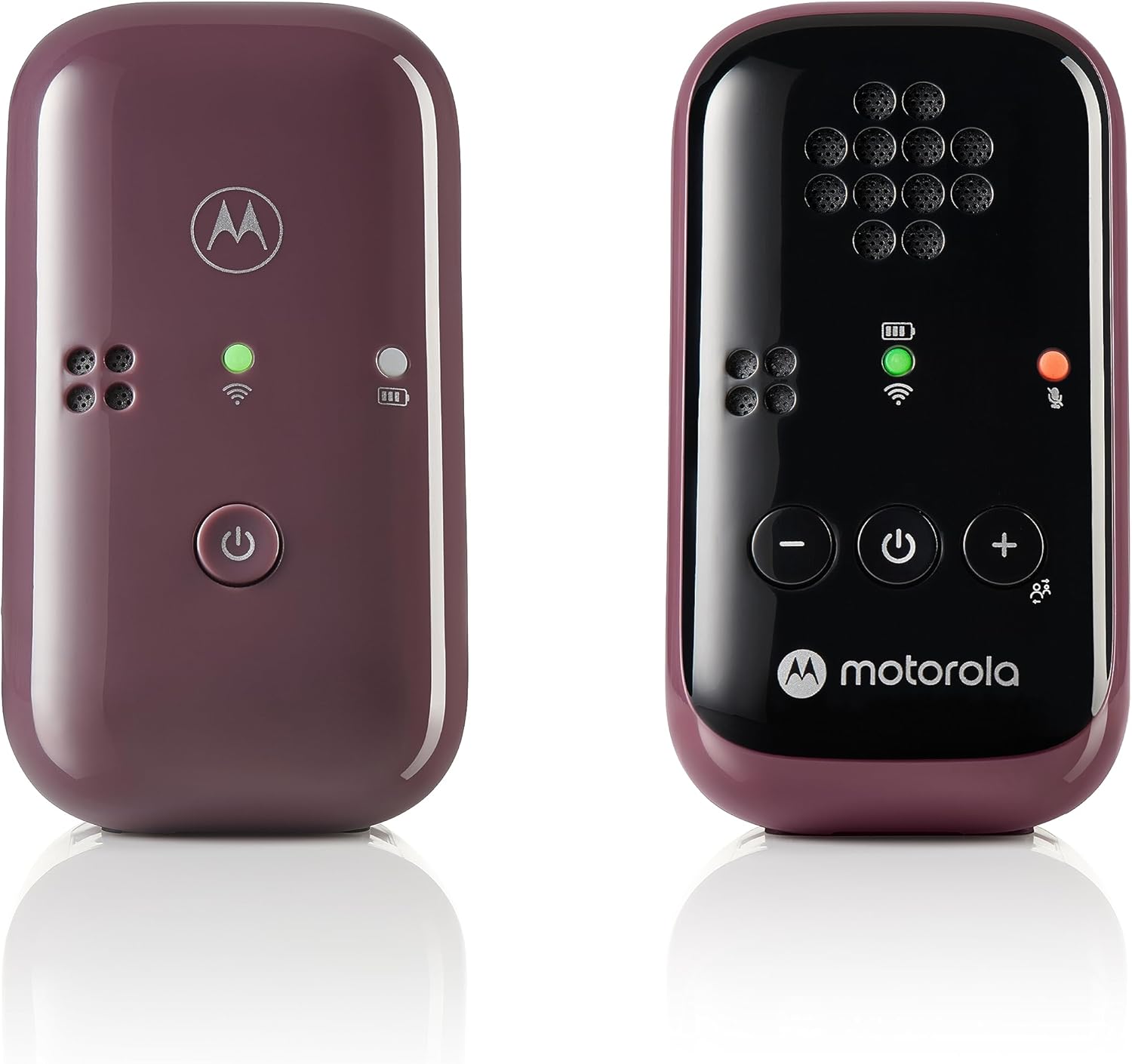
If you are choosing strictly between the two units in the title, the VTech VM5463 wins for accessibility because its parent unit has a built-in vibration alert that triggers when the microphone picks up crying. The Infant Optics DXR-8 PRO has no vibration at all—only a visual sound-level LED and an audible chime. However, the VTech’s vibration is gentle enough that many profoundly deaf parents sleep through it. That is why the modern recommendation is to skip a closed-loop dedicated parent unit entirely and use a Wi-Fi monitor that pushes alerts to a wrist-worn device or pillow shaker.
VTech VM5463: what it offers deaf parents
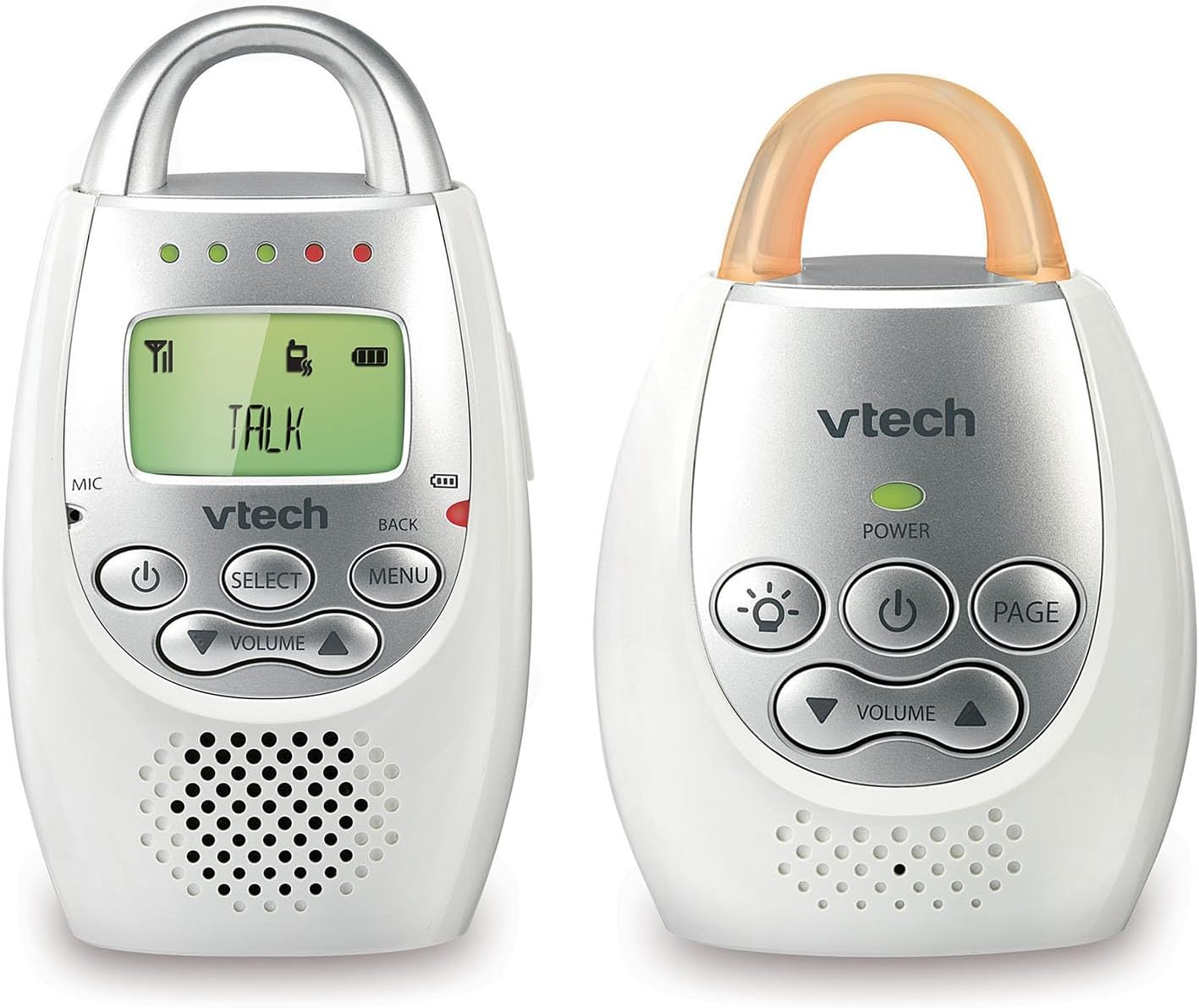
The VM5463 is a 5-inch closed-network video monitor (no Wi-Fi required) with pan-tilt-zoom and a dedicated parent handheld. For accessibility it provides:
- Built-in vibration alert on the parent unit that activates when the microphone detects sound above a threshold you set.
- Visual sound-level LED bar across the top of the parent screen—five LEDs light progressively brighter as the baby gets louder.
- Belt clip so the unit can sit against your body during the day, increasing the chance you feel the vibration.
- Always-on screen mode so the video feed never blanks, which helps lipreading partners or deaf grandparents watch passively.
The downsides for deaf users are real. The vibration motor is the same small eccentric weight used in older flip phones—fine if the unit is clipped to a waistband, often imperceptible if left on a nightstand or under bedding. There is also no integration with hearing-aid streamers, no companion app, and no way to route the alert to a bed shaker or smartwatch.
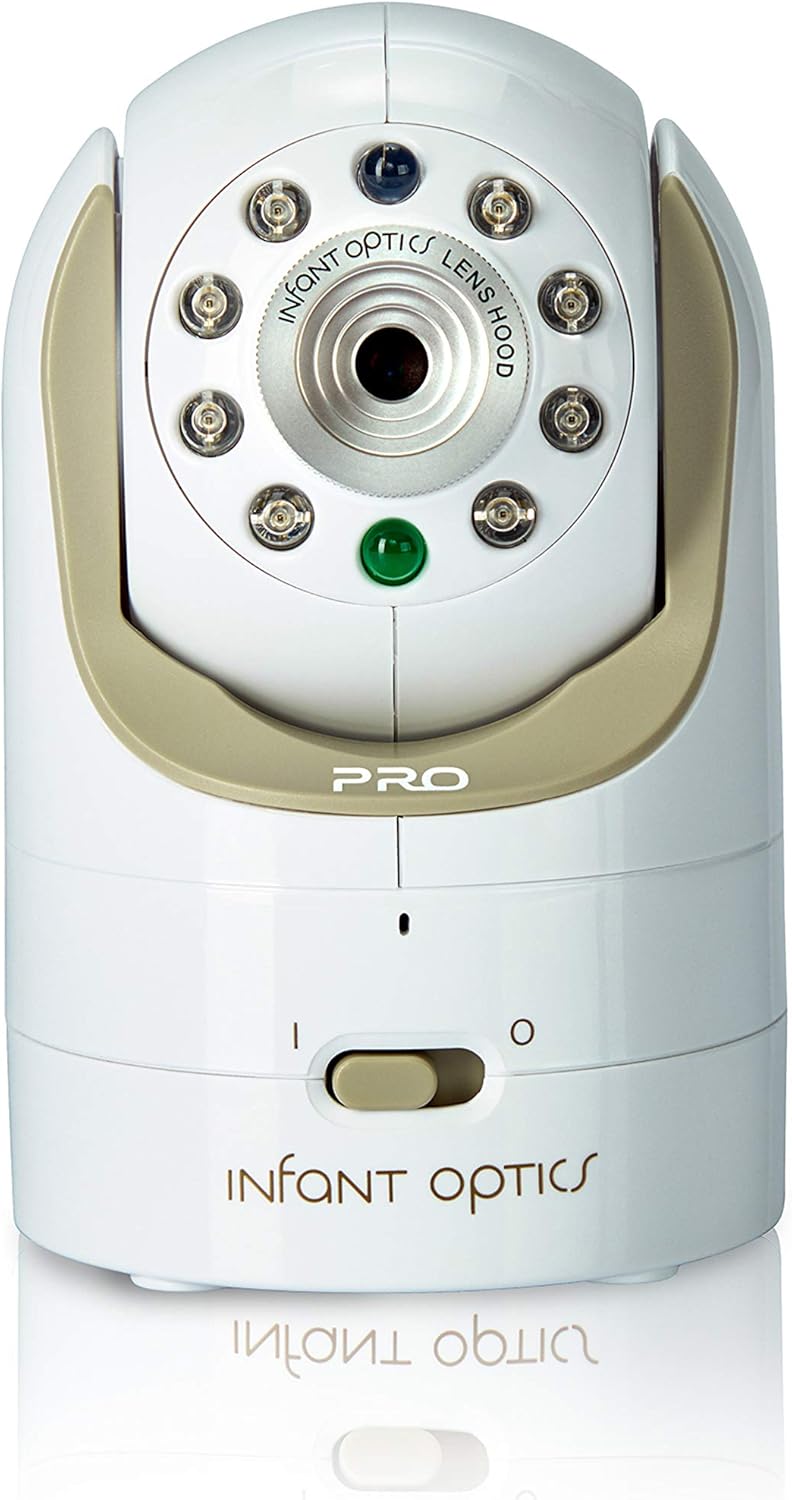
Infant Optics DXR-8 PRO: strengths and vibration limitations
The Infant Optics DXR-8 PRO is beloved for its modular interchangeable lens system, secure FHSS radio link, and minimal lag. It is also a privacy-friendly choice because it never touches the internet. For deaf parents, though, it is the weaker pick:
- No vibration motor. The parent unit has only audible alerts and a vertical bar of sound-level LEDs.
- Screen sleeps by default to save battery, so a glance at a dark unit tells you nothing.
- No app or external alert routing. If you cannot hear the chime, the only feedback is looking directly at the LEDs.
Some users hack around this by velcroing the DXR-8 PRO to a vibrating cushion that is itself triggered by a separate sound-activated switch—clever, but fragile. If silent vibration matters, do not start here.
Comparison table
| Feature | VTech VM5463 | Infant Optics DXR-8 PRO |
|---|---|---|
| Built-in vibration alert | Yes (mild) | No |
| Visual sound-level LEDs | 5 LEDs, top bar | 5 LEDs, side bar |
| Screen always-on option | Yes | Limited |
| Wi-Fi / smartphone alerts | No | No |
| Smartwatch haptic support | No (workaround needed) | No (workaround needed) |
| Interchangeable lens | No | Yes |
| Pan/tilt/zoom | Yes (motorized) | Manual pan, motorized tilt |
| Belt clip on parent unit | Yes | No |
| Best for deaf parents | Better of the two | Visual-only |
The vibration alert gap (and how to bridge it)
Neither unit is certified as assistive listening hardware. The Americans with Disabilities Act and similar standards (Canada, UK) treat baby monitors as consumer electronics, not medical devices, so manufacturers are not required to meet any tactile-alert benchmark. That has left a real product gap that the deaf parenting community usually fills with one of three workarounds:
- Smartphone push + smartwatch haptics. Use a Wi-Fi camera whose companion app supports cry detection. Route notifications to an Apple Watch, Galaxy Watch, or Fitbit so the alert lives on your wrist where you cannot ignore it.
- Bed shaker via IFTTT/SmartThings. Trigger a Sonic Alert or iLuv ShakerNeck bed shaker from the same Wi-Fi event that fires the camera alert. Setup is fiddly but reliable.
- Hearing partner relay. A second adult clips the VTech VM5463 parent unit to their pajamas; if they wake, they wake you. Effective but not independent.
For most deaf parents in 2026, option 1 is the cleanest. That means choosing a smart camera that pushes reliable cry-detection alerts rather than buying a closed-loop monitor like the VM5463 or DXR-8 PRO. See our deeper guide on baby monitors with flashing light and tactile alerts for the full setup walkthrough.
Smarter 2026 picks for deaf parents who need a vibration alert
These Wi-Fi-capable cameras work better as the front end of a vibration alert system than either monitor in the title. Pair any of them with a smartwatch and you have a real baby monitor for deaf parents vibration alert chain that does not depend on hearing a chime.
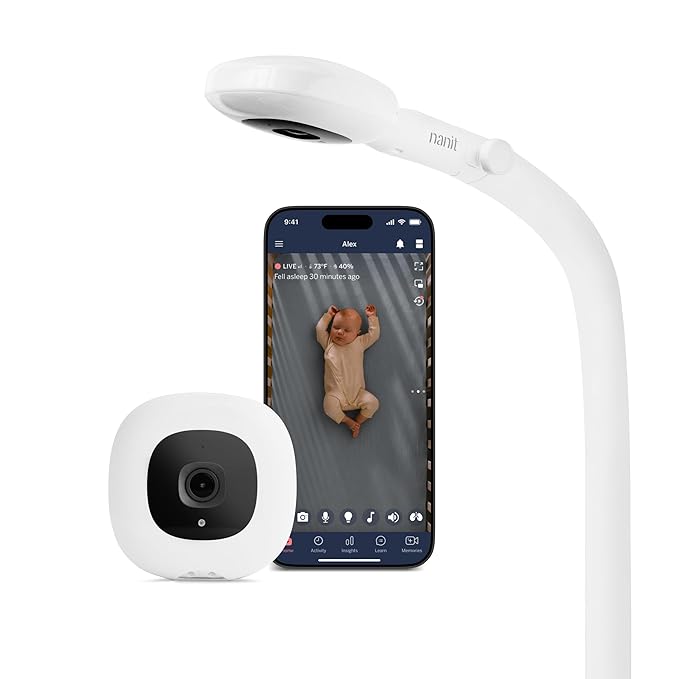
Nanit Pro Smart Baby Monitor with Floor Stand
The Nanit Pro is the strongest match for deaf parents because its cry-detection model runs in the cloud and reliably pushes a phone notification within two to three seconds. Those notifications inherit your phone’s haptic profile, so an Apple Watch or Galaxy Watch will buzz on your wrist. Nanit also offers sleep analytics with a visible timeline you can scroll back through in the morning—useful when you want to verify the night went the way you think it did. The 1080p sensor and overhead floor-stand mount give a stable crib-down view that pairs well with lipreading-friendly room lighting. Check the Nanit Pro with Floor Stand on Amazon.
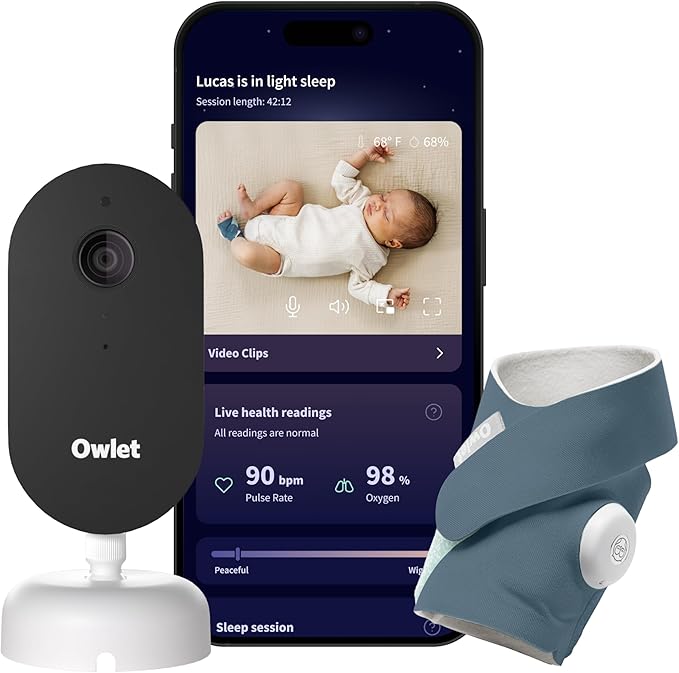
Owlet Dream Duo (Gen 3) Smart Baby Monitor
The Dream Duo bundles a 2K HD camera with the Dream Sock, which tracks oxygen and pulse rate. That second data stream matters: the app fires a distinct haptic notification pattern for sock-driven “red” health alerts versus normal cry alerts, so you can feel the difference on your wrist without looking at the screen. For deaf parents juggling a medically fragile infant, that differentiated haptic vocabulary is invaluable. The Gen 3 hardware also improved Bluetooth reliability, which had been a sore spot on earlier units. See the Owlet Dream Duo Gen 3 on Amazon.
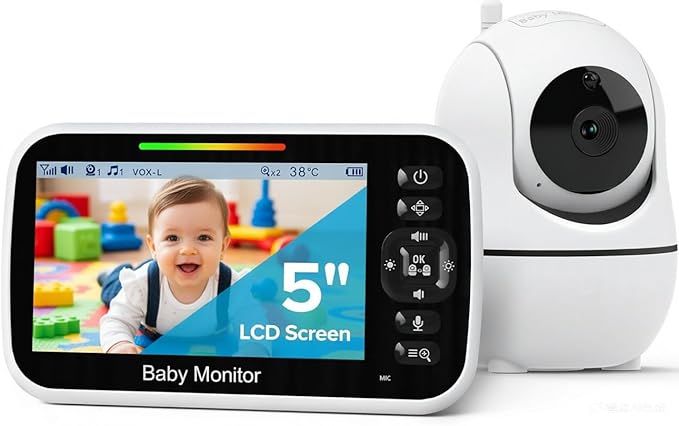
HelloBaby No-Wi-Fi Baby Monitor (5-inch, PTZ)
If Wi-Fi is off the table—some deaf parents prefer airgapped gear for privacy—the HelloBaby 5-inch is the closest analog to the VTech VM5463 with a brighter, larger sound-level indicator and a 30-hour battery so it can sit on your pillow all night. Its sound bar uses six LEDs instead of five and is positioned along the bottom of the screen where peripheral vision picks it up more easily. Pair it with a separate sound-activated bed shaker for the haptic layer. View the HelloBaby No-Wi-Fi 5-inch monitor on Amazon.
HelloBaby 5-inch Monitor with 2 Cameras
For multi-room households (nursery plus a daytime play area), the two-camera HelloBaby lets you toggle visual coverage without re-pairing units. The dual-camera setup is helpful for deaf parents because you keep eyes on both spaces from one screen and one LED bar—less context switching, fewer missed alerts. Same 30-hour battery and bottom-mounted sound-level LEDs as the single-camera version. Check the HelloBaby 2-camera bundle on Amazon.
GoodBaby No-Wi-Fi PTZ Monitor
The GoodBaby is a budget alternative that still offers motorized pan-tilt and an oversized sound-activation indicator. It will not vibrate on its own, but it is light enough to clip into a chest pocket or shirt collar, which is how some deaf parents extend its usable alert envelope. A reasonable secondary unit if you want a backup or a daytime monitor in a different room. See the GoodBaby PTZ monitor on Amazon.
Setting up a reliable vibration alert chain
Whichever monitor you pick, the alert chain matters more than the box on the shelf. A workable 2026 setup for a deaf parent looks like this:
- Primary camera: a Wi-Fi unit (Nanit Pro or Owlet) with cry detection turned on at medium sensitivity.
- Wrist layer: a smartwatch with the camera app installed, prominence notifications enabled, and “silent vibrate” enabled overnight.
- Backup layer: a bed shaker triggered by a smart plug rule—so even if the watch dies, the bed still moves.
- Visual layer: a smart bulb (Hue, Wiz) flashing red when the camera detects a cry. Useful in the daytime when the watch is off.
Test the entire chain weekly. Cry-detection models drift; firmware updates change notification behavior; smartwatch battery saver modes silently suppress haptics at 20%. We walk through a full weekly test routine in our 2026 smart nursery setup guide.

Privacy considerations for Wi-Fi monitors
Wi-Fi cameras send video and metadata to the manufacturer’s servers. Deaf parents who rely on cloud-pushed haptic alerts are accepting that trade-off in exchange for accessibility. Mitigate it by enabling two-factor authentication, putting the camera on a guest Wi-Fi VLAN, and disabling cloud recording you do not need. For background reading on the broader trade-off see our Wi-Fi vs no-Wi-Fi baby monitor comparison.
Frequently Asked Questions
Does the VTech VM5463 vibrate strongly enough to wake a profoundly deaf parent?
Usually no, not on its own. The VM5463’s vibration motor is similar to a smartphone’s and is designed to alert someone who is already lightly awake or has the unit clipped to their body. Profoundly deaf parents who sleep deeply almost always need a supplemental bed shaker or smartwatch chain to wake reliably.
Can the Infant Optics DXR-8 PRO be modified to vibrate?
Not directly—there is no expansion port or compatible accessory from Infant Optics. The common workaround is a sound-activated bed shaker (Sonic Alert, iLuv) placed near the DXR-8 PRO parent unit so its audible chime triggers the shaker. It works but adds two points of failure: the chime must be loud enough and the shaker microphone must be sensitive enough.

Which baby monitor sends vibration alerts to an Apple Watch in 2026?
Any Wi-Fi camera whose iOS app supports critical or time-sensitive notifications can route haptics to an Apple Watch. The most reliable in 2026 are Nanit Pro, Owlet Dream Duo, Cubo Ai Plus, and Eufy SpaceView Pro. Enable “Mirror my iPhone” in the Watch app and turn off Focus modes overnight.
Is there a baby monitor designed specifically for deaf parents?
As of 2026, no major manufacturer ships a monitor marketed as a baby monitor for deaf parents vibration alert system out of the box. Small specialty brands (Harris Communications, ADCO) sell baby-cry transmitters that pair with their existing tactile alerting ecosystems, but none of those come with a video feed. Most deaf parents end up combining a consumer video camera with a tactile alerting kit.
Will a smartwatch reliably wake me from deep sleep?
A modern Apple Watch or Galaxy Watch with prominent haptics enabled wakes most users from stage 2 sleep but is less reliable in stage 3 or REM. That is why the bed-shaker backup layer matters. If you co-sleep with a hearing partner, also enable their phone as a redundant alert path.
Can I use a video baby monitor with cochlear implant streaming?
Yes, indirectly. The monitor itself does not stream to your processor, but the companion app’s notification sound will route through your phone’s Bluetooth audio profile, which most modern cochlear implant processors (Cochlear Nucleus 8, Advanced Bionics Marvel CI) can receive. Check that your processor stays paired overnight—some auto-disconnect after 30 minutes of inactivity.
What is the cheapest reliable vibration alert setup for a deaf parent?
Under $150 in 2026: a HelloBaby 5-inch no-Wi-Fi monitor plus a $40 sound-activated bed shaker. The HelloBaby’s audible chime triggers the shaker; you get an airgapped video feed plus a tactile wake. It is not as elegant as a smartwatch chain, but it requires no Wi-Fi, no subscription, and no app maintenance. See our best baby monitors for hearing-impaired parents roundup for more budget combinations.
Key Takeaways
- Choosing the right baby monitor for deaf parents vibration alert means matching capacity and output ports to your actual devices
- Always check actual watt-hours (Wh), not just watts — runtime depends on Wh, not peak output
- Also covers: vtech vm5463 vibration deaf parents
- Also covers: infant optics vibration alert hearing impaired
- Also covers: baby monitor flashing light deaf
- Compare price-per-Wh across models to find the best value for your budget