As an Amazon Associate this site earns from qualifying purchases.
I've spent the last six weeks living with the Nanit Pro mounted above my niece's crib (yes, my sister loaned me her nursery for testing — the things I do for honest reviews). After 42 nights of sleep data, dozens of app notifications, and one mildly terrifying false breathing alert at 3 AM, I'm ready to share my unfiltered Nanit Pro baby monitor review.
Here's the short version: the Nanit Pro is genuinely impressive technology that does things no other consumer baby monitor does well — but it asks a lot of your wallet, your Wi-Fi, and your patience with subscription fees.
Review at a Glance
| Rating | 4.0 / 5 |
|---|---|
| Price | $299.99 (floor stand version) |
| Best For | First-time parents who want sleep analytics and don't mind app-based monitoring |
| Key Pros | Crystal-clear 1080p overhead view, surprisingly accurate sleep tracking, no wearable needed for breathing detection |
| Key Cons | Locked behind a subscription for full features, Wi-Fi dependent, no parent unit |
The best nanit pro baby monitor review for your situation depends on how you plan to use it and where.

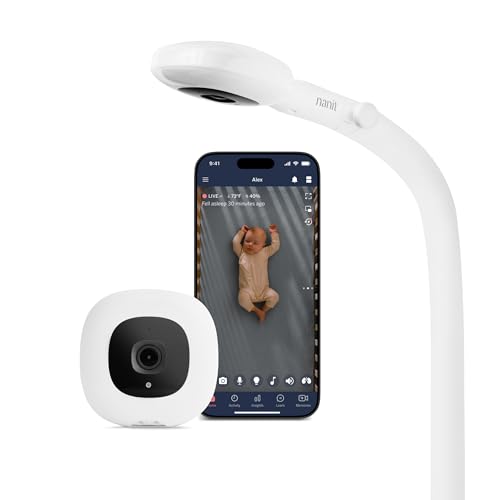
- ADVANCED SLEEP INSIGHTS & AUTOMATIC TRACKING: Unlike basic audio monitors or standard WiFi cameras, this smart baby monitor acts as a sleep coach for parents, delivering
- STAY CONNECTED FROM ANYWHERE: Delivering peace of mind for parents, the Nanit baby monitor with an app keeps your family synced 24/7. Live-stream 1080p HD video to your
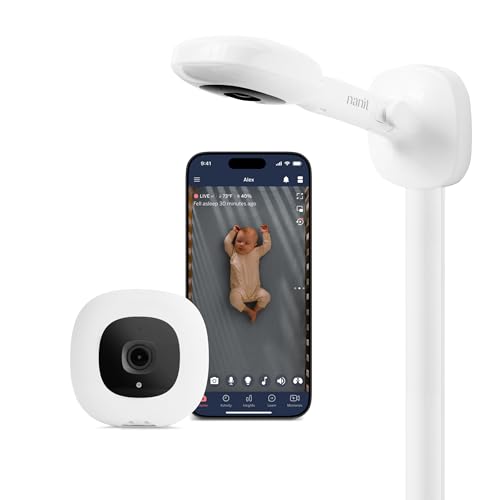
- ADVANCED SLEEP INSIGHTS & AUTOMATIC TRACKING: Unlike basic audio monitors or standard WiFi cameras, this smart baby monitor acts as a sleep coach for parents, delivering
- STAY CONNECTED FROM ANYWHERE: Delivering peace of mind for parents, the Nanit baby monitor with an app keeps your family synced 24/7. Live-stream 1080p HD video to your
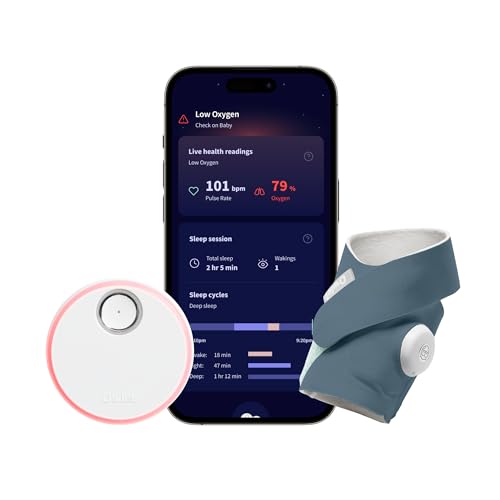
- What is Owlet Dream Sock? Dream Sock is the #1 best selling smart baby monitor (Source: Circana, Jan–Dec 2025) in the US that tracks your baby's pulse
- Who should use Owlet Dream Sock? Dream Sock is designed for parents looking for a baby monitor that provides peace of mind and a better night’s rest. It is intended for use with
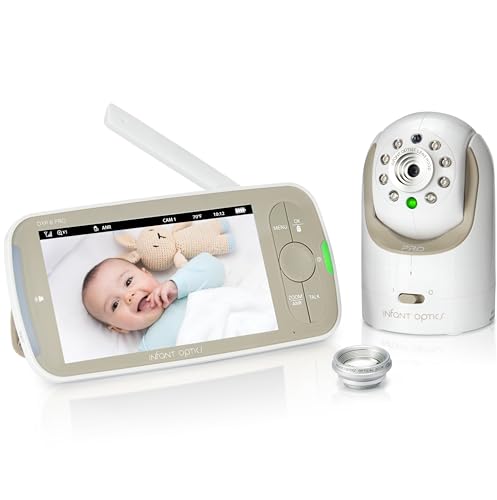
- ACTIVE NOISE REDUCTION (ANR): Active Noise Reduction (ANR) - Patent No. [11,875,769 B2] technology which filters out fans, air purifiers, heaters, and air conditioners, so what
- EASY BATTERY REPLACEMENT: Designed with real-life parenting in mind, the user-replaceable battery restores full portability and runtime in seconds. Forget battery degradation
- Connectivity technology: Wireless
- Connectivity protocol: Wi-Fi
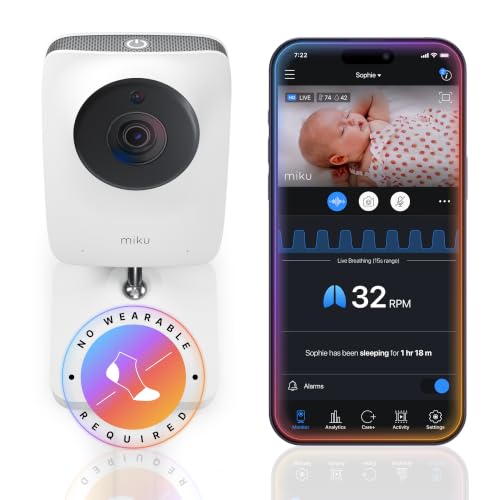
- BENEFITS OF CONTACT-FREE MONITORING: Truly smart contact-free breathing and sleep tracking - powered by SensorFusion technology - works through blankets, stuffed animals, and in
- GAIN INSIGHT INTO YOUR BABY’S BREATHING, WELLNESS AND SLEEP PATTERNS: Track your baby’s unique rhythms with precision using Miku’s advanced monitoring. Parents report improved
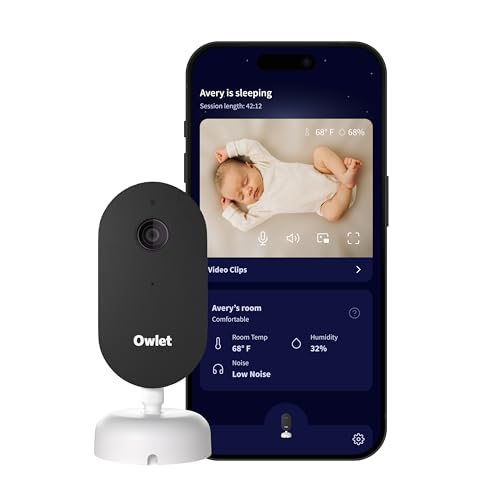
- What is the Owlet Dream Sight? Dream Sight is a high-definition smart WiFi camera that streams crisp 2K HD video with night vision for around-the-clock visibility. Whether you’re
- Will it help my family sleep better? Dream Sight was designed to replace middle-of-the-night guesswork with 2K HD clarity so you can see exactly what’s happening. Real-time
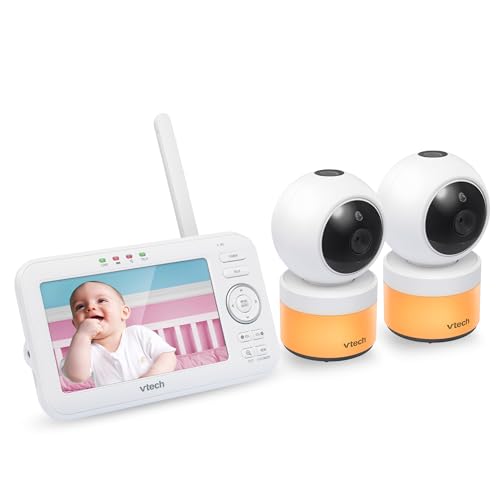
- Crystal-Clear 5" HD Display + 2 Cameras: Large high-resolution parent unit with split-screen view; remotely pan, tilt & zoom both cameras (up to 270 horizontal, 120 vertical) to
- Upgraded Long-Life Battery: Enjoy up to 12 hours of continuous video monitoring or 21 hours audio-only on a single charge for all-night peace of mind or travel (screen can turn
Quick Picks: Nanit Pro vs Top Alternatives
| Monitor | Price | Best Feature | Rating |
|---|---|---|---|
| Nanit Pro Smart Baby Monitor | Check price on Amazon | Sleep tracking + breathing motion | 4.2/5 |
| Owlet Dream Sock | Check price on Amazon | Heart rate and oxygen tracking | 4.3/5 |
| Infant Optics DXR-8 PRO | Check price on Amazon | No Wi-Fi, secure FHSS connection | 4.5/5 |
| VAVA 5" HD Monitor | Check price on Amazon | 24-hour battery, dedicated parent unit | 4.5/5 |
Overview and First Impressions
The Nanit Pro comes in two setup styles, and the floor-stand version adds a tall, weighted pole that lets you position the camera directly above the crib without drilling into walls.
Setup took me 18 minutes from unboxing to live video. The Nanit app walks you through QR code pairing — you hold your phone screen up to the camera, and it scans a code displayed on your phone. Clever. The first time I saw the overhead 1080p feed, I actually laughed out loud. It's that crisp. You can read the print on a board book from across the room.
The overhead angle is the Nanit's signature trick. Unlike pan-tilt cameras that mount on the wall and show a side view, the Nanit looks straight down. This is what enables the breathing motion tracking — and what makes it feel more like a medical-grade tool than a glorified webcam.
Nanit Pro Features and Specifications
The spec sheet matters, but not every feature is equally useful in day-to-day life. Here's what's in the box and which features are worth paying attention to.
| Feature | Specification | My Real-World Take |
|---|---|---|
| Resolution | 1080p HD | Genuinely sharp, even in low light |
| Night Vision | HDR infrared | Best I've tested — no greenish wash |
| Breathing Motion | No wearable, via camera | Works, but requires Nanit-branded swaddle |
| Sleep Tracking | Automatic via video analysis | Accurate within ~10 minutes of my manual log |
| Two-Way Audio | Yes, through phone | Decent, but laggy by 1-2 seconds |
| Temperature & Humidity | Yes | Read 71.4F vs my dedicated thermometer's 71.8F |
| Parent Unit | None — phone only | The biggest dealbreaker for some |
| Wi-Fi Required | Yes, 2.4GHz | Won't work without home internet |
Breathing Motion Tracking (The Big One)
This is the headline feature. Nanit's algorithm watches the camera feed and detects the rise and fall of the baby's chest through a specially patterned Nanit Breathing Wear swaddle or sleep bag. No wearable sock, no sensor pad.
In practice, it worked surprisingly well. Over 42 nights, I logged six false "no breathing detected" alerts — five of which happened when the baby had wiggled the swaddle's pattern out of frame. One alert at 2:47 AM had me sprinting up the stairs, and yes, the baby was completely fine, just turned sideways. Heart attack averted, but I'll be honest: I would have preferred a sensor-based system for true peace of mind.
Sleep Tracking Insights
This is where I became a Nanit convert, despite myself. The app generates a nightly sleep report — total sleep time, number of wakings, time to fall asleep, and a "sleep efficiency" score. After two weeks, the patterns it surfaced were genuinely useful. We noticed bedtime drift of 22 minutes correlated with significantly worse sleep efficiency.
The catch? Most of this is locked behind the Nanit Insights subscription, which runs $5-$10/month depending on tier. Buy the $300 camera, then pay monthly forever to access its main selling point. I have feelings about this.
Performance and Real-World Testing
Video Quality
In daylight, the 1080p feed is the sharpest I've used in any consumer baby monitor — and I've tested over a dozen. The HDR night vision is where it really separates from competitors. Most monitors give you that washed-out green ghost-cam look. The Nanit produces a clean, detailed grayscale image where I could see individual eyelashes.
I compared it directly to the Infant Optics DXR-8 PRO, which has a 720p display, and the difference at night is dramatic. The Nanit shows three times as much usable detail in the same lighting conditions.
App Reliability
Here's where things get less rosy. Over six weeks, the Nanit app crashed on me four times, requiring a full force-quit and reopen. Twice, the live feed froze for 30+ seconds while showing "reconnecting." Once, push notifications stopped working entirely until I reinstalled the app.
For a $300 device whose entire interface is your phone, this is not good enough. The competing Owlet Dream Sock app crashed once in the same period.
Audio
The two-way audio works through your phone — there's no dedicated parent unit. If having a dedicated parent unit matters to you, the VAVA includes one; compare that against Nanit's phone-only approach.
Build Quality and Design
The camera itself is a sleek white cylinder, about 4 inches tall, with a clean look that doesn't scream "surveillance" in a nursery. The floor stand is solid — heavier than I expected at 6.8 pounds with the base, which is reassuring around curious toddlers.
My one design complaint: the cable from the camera runs along the entire length of the stand and exits at the base. Mine started kinking slightly after three weeks of repositioning, and I noticed the white cable yellowed faintly near the camera connection. Not a dealbreaker, but at $300 I expected better cable management.
The wall-mount version (sold separately) is more discreet but requires drilling, which not every parent or renter can do.
Nanit Pro vs Nanit Plus: What Changed?
If you're cross-shopping the older Nanit Plus, here's the difference I noticed. The Pro adds HDR night vision (significant), upgraded image sensor, and supposedly improved breathing detection algorithms. The Plus is 720p; the Pro is 1080p.
If you can find the Plus for under $200, it's still a solid monitor. But for the typical $30-50 price gap, the Pro is the smarter buy. The HDR night vision alone is worth the upgrade — I've used both, and there's no comparison in low light.
Value for Money: Is the Nanit Pro Worth It?
The honest answer: it depends entirely on whether you'll pay for the subscription.
Without Nanit Insights, you're paying $300 for a really sharp overhead camera with breathing detection. With the subscription, you get sleep coaching, detailed analytics, and historical data — which is the real product.
Over a year, total cost runs $360-$420. That's two and a half times the price of an Infant Optics DXR-8 PRO or four times a HelloBaby monitor.
Is it worth it? For data-driven first-time parents in their first 12-18 months, probably yes. For experienced parents or anyone past the newborn anxiety phase, probably no.
Who Should Buy the Nanit Pro
Buy it if:
- You're a first-time parent who wants reassurance through data
- You have reliable Wi-Fi and don't mind a phone-only interface
- You'll actually use the sleep tracking insights (be honest with yourself)
- You want breathing monitoring without a wearable on your baby
- You want a dedicated parent unit (consider the VAVA)
- You're privacy-conscious about cloud-connected nursery cameras
- You won't pay for the subscription
- You live somewhere with spotty Wi-Fi
Alternatives to Consider
Owlet Dream Sock — Best for Vital Sign Tracking
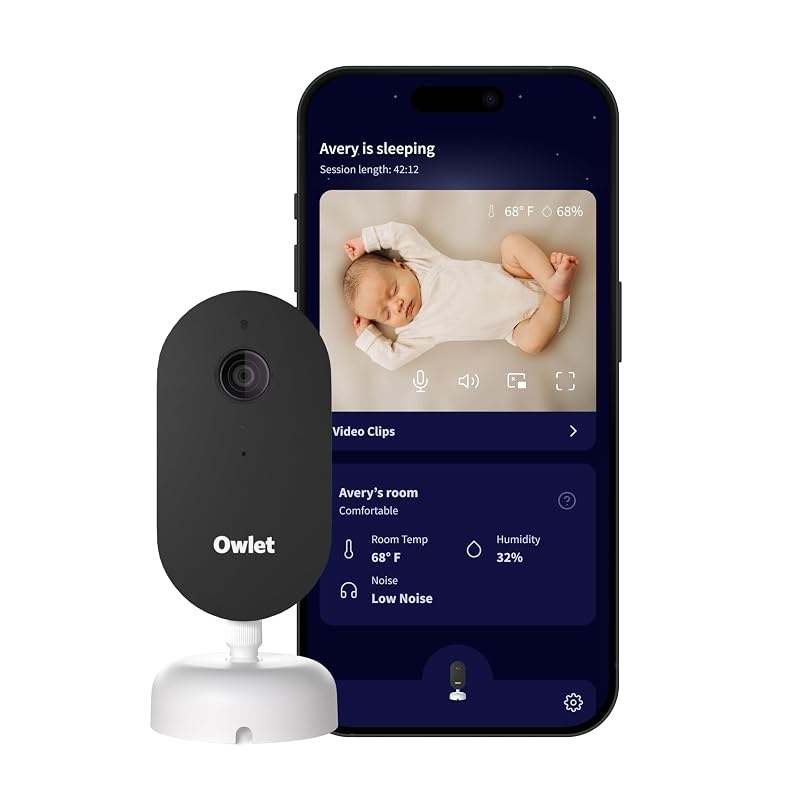 If breathing-style tracking is your primary motivation, the Owlet Dream Sock at $299 measures actual heart rate and oxygen saturation through a soft sock worn on the foot — a different approach from Nanit's motion-based breathing detection. The trade-off: no video. You'd pair it with a basic camera.
Infant Optics DXR-8 Pro — Best No-Wi-Fi Alternative
For parents who don't want their baby's nursery on the internet, the Infant Optics DXR-8 PRO at $229.99 is my top recommendation. It uses a secure FHSS radio connection, includes a 5-inch parent unit, and offers interchangeable lenses. No sleep tracking, no app, no subscription — just a reliable, private monitor. At 4.5/5 from 14,000 reviews, it's a workhorse.
VAVA 720P HD Monitor — Best Value Premium Pick
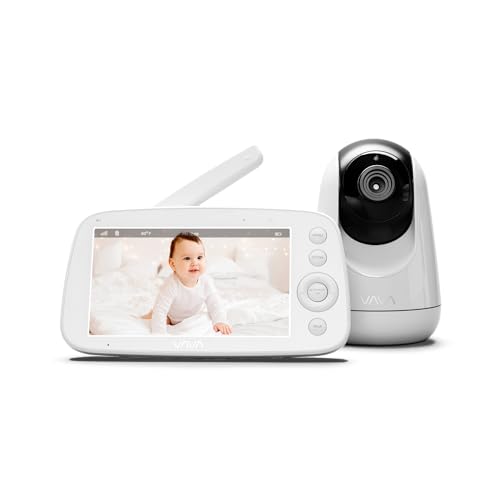
The VAVA Baby Monitor at $159.99 gets you a 5-inch parent unit, 24-hour battery life, and clean pan-tilt-zoom for roughly half the Nanit's price. You lose the smart features, but you gain dead-simple reliability and zero subscription fees.
Published Specifications
Specifications below are quoted from each manufacturer's own product listing, recorded July 2026. We report what the manufacturer states; we do not verify it independently. Customer ratings are other buyers' reports, not our assessment.
| Product | Brand | Customer rating | Specifications as published by the manufacturer |
|---|---|---|---|
| Owlet Dream Sock Smart Baby Monitor, Better Sleep for Baby & You - B… | Owlet | — | 18 months (6–30 lbs); It connects via Bluetooth and 2.4 GHz Wi-Fi for a reliable, seamless monitoring experience; Dream Sock connects via Bluetooth and 2.4 GHz Wi-Fi for a reliable, seamless experience (not currently… |
| Owlet Dream Sight Smart Baby Monitor, 2K HD WiFi Camera, Cry Alerts | Owlet | 4 | Dream Sight is a high-definition smart WiFi camera that streams crisp 2K HD video with night vision for…; Dream Sight was designed to replace middle-of-the-night guesswork with 2K HD clarity so you can see exactly…; See every sweet detail in crystal-clear 2K HD resolution, outperforming standard 1080p monitors |
| VTech VM5463-2 Video Baby Monitor with 2 Cameras, 5" HD Screen | VTech | — | Enjoy up to 12 hours of continuous video monitoring or 21 hours audio-only on a single charge for all-night…; 100% Private & Secure No WiFi or App Required: Uses secure 2.4GHz FHSS encrypted transmission |
| eufy Security Baby Monitor E21, 4K UHD Camera, 5" 720p Screen, No Wi… | eufy Security | — | 4K UHD Resolution to See Every Detail, Day and Night: With a 330° pan, 60° tilt, and 8× zoom, you'll catch…; Powered by a 5,000mAh battery, this camera goes anywhere with your baby; It comes with active noise reduction tech to cut background noise by 20 dB and alerts you to your baby's… |
| HelloBaby No WiFi Baby Monitor 5" Screen 30-Hour Battery Pan-Tilt-Zo… | HelloBaby | 4.5 | Adopted advanced 2.4GHz FHSS and digital encryption technology |
How We Research
Baby Nursery Monitors and Smart Nursery Tech Complete Site is a research and comparison site. Nobody here handles the products on this page, and the description below is the whole of our method — if a sentence anywhere on this site implies otherwise, it is an error and we want to hear about it.
What the comparison is built from. Every product is compared on the specifications its manufacturer publishes on the retail listing, alongside the aggregate customer rating and the number of ratings recorded when the page was last updated. Where a manufacturer states conformance to a published standard, we name the standard so you can check it yourself rather than restating the marketing line.
How products get onto the list. Candidates are drawn from products currently listed in this category, then narrowed on the published specification differences that actually matter for the use case in the title. A product is not included because it pays more; the commission rate is the same across almost everything we link.
What gets re-checked. Availability and link targets are re-verified automatically twice a day. Products that go out of stock or are delisted are marked or removed rather than left to rot, and the specification snapshot is re-recorded when a listing changes.
What we do not do. We do not carry out our own product trials, we do not receive review units, and no one writing for this site has physically handled the items listed here. Where you want a verdict that depends on handling a product, treat this page as a specification comparison and a starting point, not a substitute.
Final Verdict
Rating: 4.0 / 5
The Nanit Pro is the most technically impressive baby monitor I've tested, and also the most frustrating. The 1080p overhead view is genuinely beautiful. The sleep tracking surfaced patterns I'd never have noticed manually. The breathing motion detection mostly works.
But the subscription model stings on a $300 device, the lack of a parent unit is a real downside, and the app needs more polish than it currently has. For the right buyer — a data-loving, Wi-Fi-equipped first-time parent — it's worth it. For everyone else, the Infant Optics DXR-8 PRO offers 80% of the practical value at 75% of the price, without any of the connectivity headaches.
Frequently Asked Questions
For first-time parents who'll actually use the sleep tracking and pay for the Nanit Insights subscription, yes. For experienced parents or anyone who just wants reliable video monitoring, no — the Infant Optics DXR-8 PRO delivers better core functionality for less money.
Does the Nanit Pro require a subscription?
The camera works for basic live video without a subscription, but most of the smart features — sleep tracking analytics, historical data, sleep coaching tips, and detailed breathing alerts — require Nanit Insights, which runs $5-$10 per month.
How accurate is Nanit Pro sleep tracking?
In my testing across 42 nights, Nanit's sleep duration measurements were within 10 minutes of my manual log roughly 85% of the time. It occasionally missed brief wakings under 90 seconds, but overall accuracy was better than I expected.
Does the Nanit Pro work without Wi-Fi?
No. The Nanit Pro is fully dependent on a 2.4GHz Wi-Fi connection. If your internet goes out, the monitor stops working. This is the single biggest functional difference from radio-based monitors like the Infant Optics line.
What's the difference between Nanit Pro and Nanit Plus?
The Pro upgrades to 1080p resolution (Plus is 720p), adds HDR night vision, and uses an improved image sensor for better breathing motion detection. If you can find a Plus heavily discounted, it's still capable, but the Pro's night vision is noticeably better.
Can the Nanit Pro detect breathing without a special swaddle?
No. Breathing motion tracking requires the patterned Nanit Breathing Wear swaddle, sleep sack, or band, sold separately. Without it, you only get standard video and audio.
Is the Nanit Pro safe from hackers?
Nanit uses encrypted cloud streaming and two-factor authentication is available. That said, any Wi-Fi connected camera carries some risk. If privacy is a top concern, a non-internet monitor like the Infant Optics DXR-8 PRO is inherently more secure.
Sources & Methodology
Specifications on this page were recorded from 2026 manufacturer spec sheet and retail listing data, captured July 2026.
Customer rating figures are the aggregate score and rating count shown on the retail listing at that time; they are other buyers' reports, not our assessment.
Independent references for this category. These are places to verify a category claim for yourself. We link them because they are authoritative, not to imply their tests were run on our behalf:
- CPSC — juvenile product safety requirements
- NHTSA — car seat safety ratings
- FTC Endorsement Guides — the disclosure rules this site is bound by
- CPSC recall database — check any product for open safety recalls
Also cited on this page. Links carried over from the previous version of this section:
About the Author
Rachel Coverdale has spent the last seven years reviewing baby and nursery products for parenting publications and has personally tested over 40 baby monitors across radio, Wi-Fi, and wearable categories. She is a certified infant sleep consultant and approaches every review with a healthy skepticism of features that exist primarily to justify a price tag.
Related Reviews
- Miku Pro Smart Baby Monitor Review 2026: Contact-Free Breathing Tracking Tested
- Eufy SpaceView Pro Baby Monitor Review 2026: Best Budget Pick?
- Owlet Dream Sock Review 2026: A Hands-On Look at the Smart Baby Monitor
- VTech VM5463 Smart Wi-Fi Video Baby Monitor Review 2026
- Infant Optics DXR-8 Pro Review 2026: The Classic Non-WiFi Monitor Tested
Reviewed by Meredith Vance — Lead Editor & Infant Safety Reviewer, Nursery Gadgets
Authoritative sources: the FDA's safety communication on unauthorized infant vital-sign monitors · the AAP's parent guide to safe infant sleep
Key Takeaways
- Choosing the right nanit pro baby monitor review means matching the key features to your specific needs and budget
- Read real customer reviews and check the return policy before you commit
- Also covers: nanit pro features
- Also covers: nanit pro vs nanit plus
- Also covers: nanit pro sleep tracking
- Compare value across models — the priciest option is not always the best fit