The short answer for a miku pro tatami floor nursery no crib install: you cannot use the included crib clamp, so you need either Miku's wall-mount kit or a tall floor stand positioned roughly 3 to 4 feet directly above the futon, with the camera angled straight down across baby's chest. The Miku Pro's contactless breathing tracking depends on an unobstructed top-down view of the torso, and Japanese-style tatami rooms—where baby sleeps on a thin shikibuton at floor level alongside parents—make that geometry harder to dial in than a standard nursery. Below we cover the mounting math, futon safety, and the smart monitors that adapt best to floor-level sleeping in 2026.
Why the Miku Pro Is Tricky on Tatami (and Where It Still Wins)
Top Picks
Floor-Friendly Monitor Comparison
| Monitor | Floor-Level Friendly? | Wi-Fi Required | Best For | Approx. Price |
|---|---|---|---|---|
| Nanit Pro + Floor Stand | Yes (purpose-built stand) | Yes | Tatami rooms with reliable Wi-Fi | $$$ |
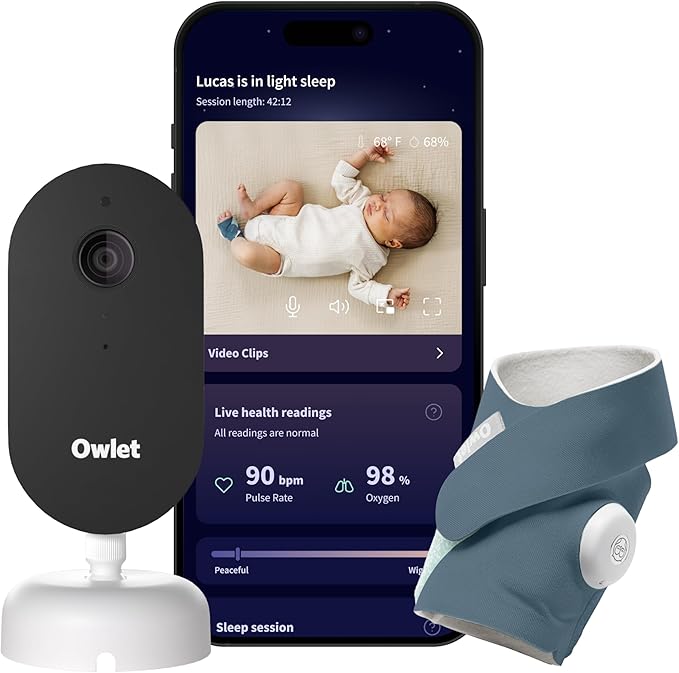
| Owlet Dream Duo (Gen 3) | Yes (sock + camera combo) | Yes | Parents wanting wearable backup | $$$$ |
| HelloBaby No-WiFi PTZ | Yes (any flat surface) | No | Rental tatami apartments | $ |
| GoodBaby No-WiFi PTZ | Yes (any flat surface) | No | Budget floor nursery | $ |
| HelloBaby 5\" Dual Camera | Yes (two-room flexibility) | No | Co-sleep + nap room combos | $$ |
The Miku Pro was engineered around an assumption that virtually every American review ignores: a crib with vertical slats and a mattress sitting roughly 20 inches off the floor. The default crib clamp is useless on tatami because there is no rail to grip. More importantly, the breathing algorithm needs the camera lens placed within a fairly narrow distance window—too far away and the pixel-level chest motion gets lost in noise; too close and you cut off the full body, which the system uses to confirm sleep position. On a futon laid directly on tatami, the camera-to-baby distance is roughly double what Miku's defaults assume.
The flip side: Miku Pro is one of the only consumer monitors that does not require a wearable sock, band, or contact sensor. For a tatami setup—where you may be co-sleeping in the same room or rotating the futon location seasonally—the absence of anything strapped to baby is a genuine advantage. You just need to solve the mounting problem.
Three Mounting Approaches for a Crib-Free Floor Nursery
For a miku pro tatami floor nursery no crib arrangement that actually tracks breathing reliably, you have three realistic options:
1. Wall mount with a downward-angled bracket. Miku sells a wall-mount accessory that, paired with a 30-45 degree bracket, can hang the camera over a futon placed against a wall. The challenge in a traditional Japanese room is that you often cannot drill into shoji screens or thin plaster—so this works only if you have a load-bearing wall in reach.
2. Tall tripod or photography stand. A weighted C-stand or boom arm rated for 5+ pounds can suspend the camera over the futon from a corner of the room. This is the most popular workaround in tatami homes. Keep the stand outside any walking path, and weight the base so a curious toddler cannot tip it.
3. Ceiling mount. If you own the home and have a solid ceiling joist, a flush ceiling mount roughly 4 feet above the futon centerline produces the cleanest breathing data. This is the highest-effort install but the most stable long-term.
Whichever route you choose, measure twice: Miku Pro wants the camera centered on the chest, not the head, and a futon-on-tatami sleeper sits about 8-10 inches off the floor, not the 20+ inches Miku assumes for cribs.
The Best Monitors for a Tatami Floor Nursery Without a Crib
If Miku Pro's mounting math feels like more work than your install is worth—or if you are renting an apartment where wall and ceiling drilling is forbidden—these are the monitors that adapt cleanly to a miku pro tatami floor nursery no crib style setup without forcing you to engineer custom hardware.
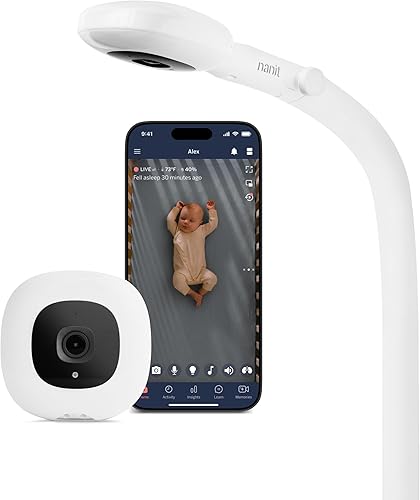
Nanit Pro Smart Baby Monitor with Floor Stand
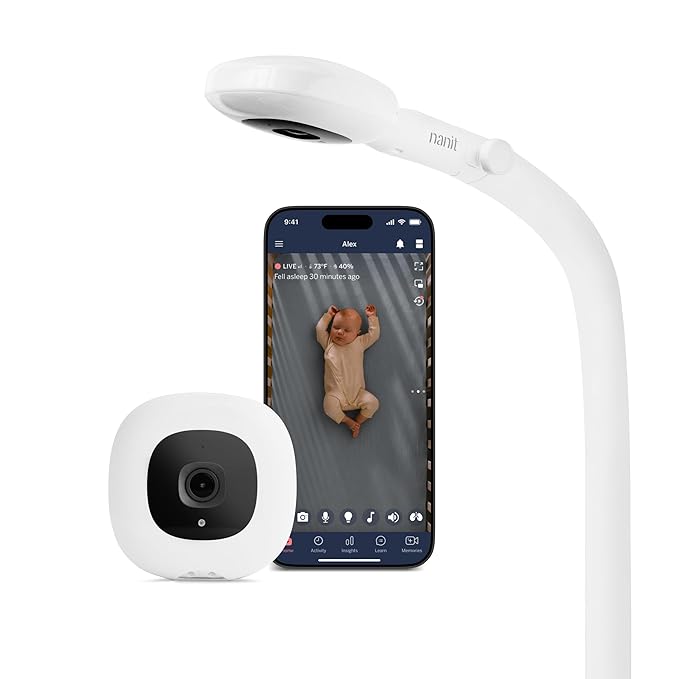
Nanit is the closest functional cousin to Miku Pro on the U.S. market, and crucially, it ships a dedicated floor stand SKU that solves the tatami problem out of the box. The 1080p overhead camera mounts to a weighted base that you place on the tatami beside the futon, with an arm that extends over the sleep zone. It still gives you the top-down view that powers Nanit's sleep tracking, breathing motion analytics, and time-lapse highlight reels—without requiring crib rails or drilled walls. The trade-off versus Miku is that Nanit's breathing tracking uses a swaddle band rather than pure contactless vision, but for parents who already prefer a swaddle, that is a wash. Check the current price at Amazon.
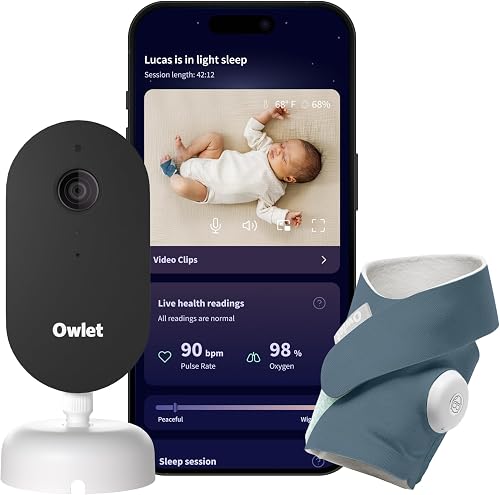
Owlet Dream Duo (Gen 3)
The Dream Duo pairs a 2K HD camera with the Owlet Dream Sock, which reads heart rate and oxygen directly from baby's foot. For a tatami floor nursery, that combination is genuinely useful: the camera does not need to be mounted directly overhead because the sock is the primary vital-sign source, so you can place the camera on any nearby chest of drawers or tansu pointed at the futon. It is the most expensive option on this list, but it is also the only one that gives you actual SpO2 data rather than vision-based proxies. For families who chose floor sleeping specifically to reduce SIDS-adjacent worry, that data is reassuring. Pricing and bundle options on Amazon.
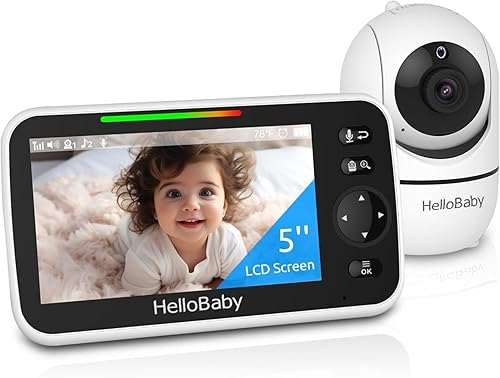
HelloBaby No-WiFi 5-Inch PTZ Monitor
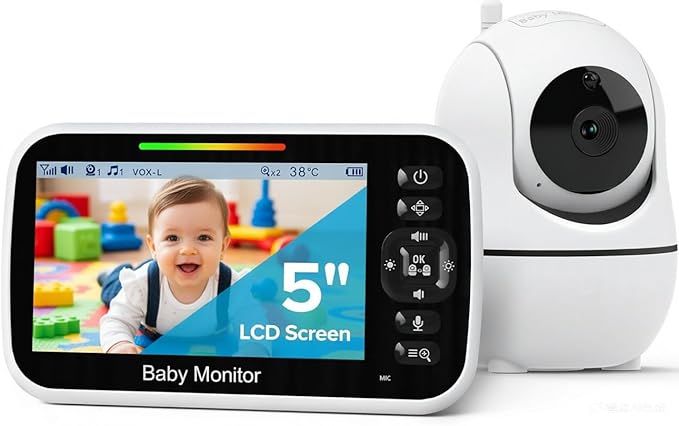
This is the pragmatic pick for tatami apartments in Tokyo, Osaka, or anywhere else with rental restrictions on drilling or smart-home device installation. The 5-inch parent unit and PTZ camera run on a private FHSS radio link with no internet involvement, no app, and no cloud account—which matters in Japan where many parents avoid putting baby footage onto U.S.-hosted servers. The 30-hour battery on the parent unit means you can take it into the kitchen, the genkan, or even a small tatami tea room without dropping signal. Place the camera on a low shelf or photography stand pointed across the futon. Check it on Amazon.
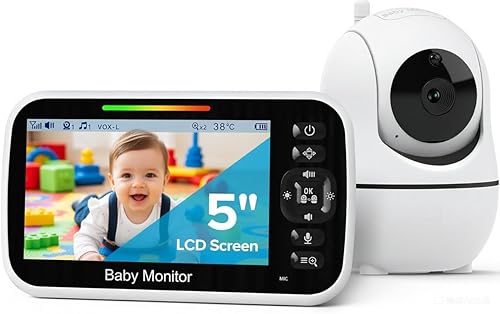
GoodBaby No-WiFi PTZ Monitor
The GoodBaby is the budget pick when you simply need eyes on the futon and do not want to commit to a $300+ smart system. The pan-tilt-zoom camera is small enough to perch on a low Japanese-style table beside the sleep area, and the parent unit handles the audio cues that matter most—grunts, stirs, and full cries—without forcing you to set up Wi-Fi credentials. For grandparents hosting a baby a few weekends a month, this is the right price-to-utility ratio. See the current listing on Amazon.
Safety Notes for a Tatami Floor Nursery Without a Crib
A few items that get overlooked in U.S. monitor guides but matter when baby sleeps on a futon:
- Futon firmness matters more than usual. A traditional shikibuton is firm by Japanese standards but softer than a U.S. crib mattress. Confirm the surface passes the standard infant sleep-surface firmness check before relying on any monitor.
- Keep the camera cord out of reach. Floor-level installations mean cords run along tatami at crawl height. Use cord-channel covers and route the cable around the room perimeter, never across the sleep area.
- Verify the room temperature. Tatami rooms in older Japanese homes can swing 10-15°F between seasons. A monitor with a temperature sensor (Nanit Pro and Miku Pro both include one) is genuinely useful here in a way it would not be in a climate-controlled Western nursery.
- Avoid mounting over kotatsu or hibachi-style heaters. If your room doubles as a daytime living space, do not run the monitor cable near the heating element.
For broader context on selecting smart monitors, see our guides on no-wifi baby monitors for apartments and contactless breathing monitor comparisons. If you are converting an existing room, our floor-bed Montessori nursery setup guide covers many of the same mounting challenges as a tatami install.
Frequently Asked Questions
Can the Miku Pro track breathing accurately from a tripod mount above a futon?
Yes, provided the camera sits 36-48 inches directly above baby's chest and the lens has an unobstructed view of the torso. Miku's algorithm is tuned for top-down geometry, so a side-angled tripod or one mounted from the corner of the room will under-report breathing motion. Test the setup during a nap with a parent present before relying on the alerts overnight.
Does the Miku Pro work in Japan with Japanese Wi-Fi and electrical standards?
The Miku Pro ships with a 110V power brick designed for North American outlets and connects to 2.4 GHz Wi-Fi. In Japan, the 100V grid is within tolerance for the adapter, but the plug shape is the same Type A, so it will physically fit. You will need a Japanese 2.4 GHz Wi-Fi network and an account region that supports your address; some firmware features default to U.S. region settings.
Is it safe to put a baby monitor camera on the tatami floor itself?
Floor placement is acceptable for basic video monitoring but not ideal for breathing tracking, which needs an overhead angle. More importantly, any camera at floor level becomes a hazard once baby starts crawling around 6-9 months. Plan for an overhead or shelf-level mount before that milestone rather than retrofitting under deadline pressure.
What is the minimum camera height for reliable contactless breathing detection?
Across the major contactless monitors—Miku, Nanit, and Cubo Ai—the manufacturers recommend 3 to 4 feet above the sleep surface. Below 3 feet, the camera frames only baby's head; above 5 feet, chest motion drops below the pixel threshold the algorithm can resolve. On tatami, measure from the top of the futon, not the floor.
Can I co-sleep on the same futon and still use a video monitor?
You can, but breathing detection becomes unreliable when an adult is in the frame because the algorithm cannot separate two chests. If you co-sleep, treat the monitor as audio and video only, and disable breathing alerts during shared-bed hours to avoid false negatives that could create a false sense of security.
Will a no-Wi-Fi monitor like HelloBaby or GoodBaby work in a Japanese apartment?
Yes. These monitors use FHSS radio in the 2.4 GHz ISM band, which is unlicensed and legal for consumer use in Japan. They do not connect to any cloud, do not require an app, and do not depend on the apartment's internet plan. For renters who cannot install smart-home infrastructure, they are often the most practical choice.
How do I prevent toddlers from pulling down a tripod-mounted monitor?
Use a sandbag-weighted base rated for at least 15 pounds, route the power cord up the stand and along the ceiling rather than across the floor, and position the tripod legs in the corner of the room behind a piece of furniture. Once baby is mobile, plan to transition to a permanent wall or ceiling mount; tripods are a setup-phase solution, not a long-term one.
Key Takeaways
- Choosing the right miku pro tatami floor nursery no crib means matching the key features to your specific needs and budget
- Read real customer reviews and check the return policy before you commit
- Also covers: miku pro futon floor sleeping baby
- Also covers: miku pro angle for floor mattress
- Also covers: miku pro breathing tracking without crib
- Compare value across models — the priciest option is not always the best fit