The best baby monitor nicu twins staggered discharge setup pairs one camera per crib with a single parent unit (or single app feed) so you can watch Twin A at home while Twin B is still in the NICU, then seamlessly add the second camera the day your second baby comes home. For most families, a dual-camera bundle that lets you activate the second cam later — like the HelloBaby 2-camera 5-inch monitor for a no-Wi-Fi option or the Nanit Pro plus a second Nanit head for a smart-app option — is the cleanest answer. This guide walks through the specific tradeoffs of monitoring twins discharged days or weeks apart, plus the five products NICU parents actually buy for this exact situation in 2026.
Why a "NICU twins staggered discharge" monitor is a different shopping problem
Top Picks
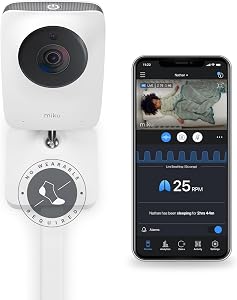
When twins come home the same day, you buy a 2-camera monitor and you're done. A baby monitor nicu twins staggered discharge situation is harder for three reasons. First, you only need one feed for the first few days or weeks, but you cannot wait to buy the second camera — supply chains move, bundles disappear, and the model you bought in week one may be discontinued by week six. Second, the twin still in the NICU often comes home on monitors of their own (apnea, pulse-ox, NG-feed pumps), so your home camera needs to coexist with medical alarms without adding more beeping noise. Third, NICU graduates frequently sleep in separate cribs or even separate rooms early on (one in the bassinet next to you, one in a nursery), so the camera system has to handle two different physical layouts.
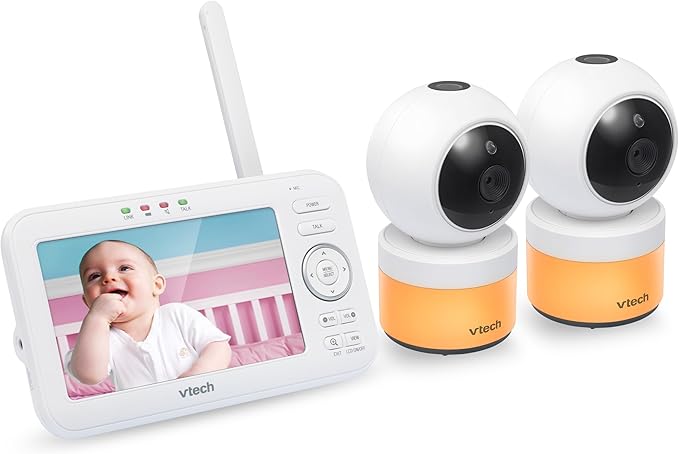
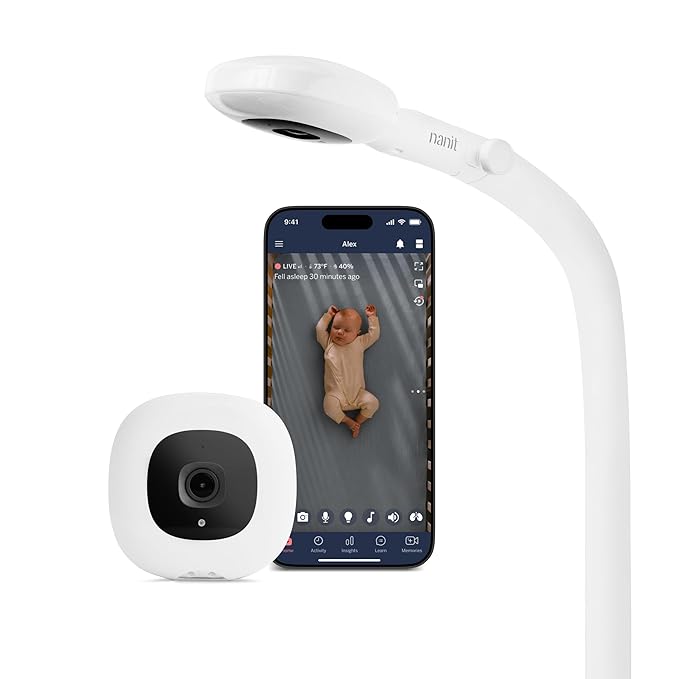
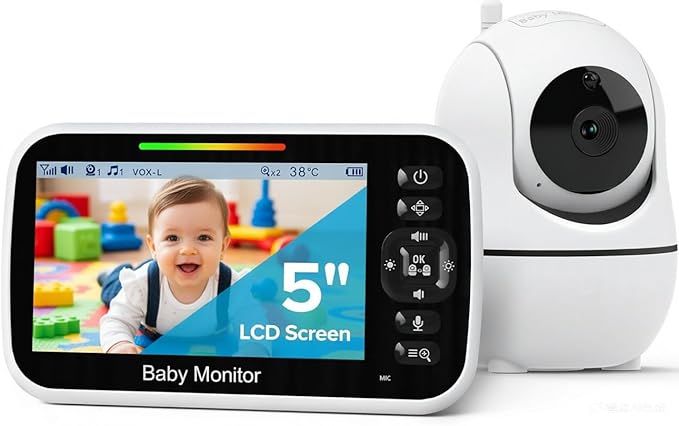
The right answer almost always falls into one of three buckets: a scalable dual-camera bundle bought up front, a smart Wi-Fi system you expand by adding a second app-paired camera, or a cheap single-camera unit you duplicate when baby #2 discharges. We'll cover all three.
Quick comparison: top monitors for NICU twins coming home on different days
| Monitor | Type | Add 2nd camera later? | Best for |
|---|---|---|---|
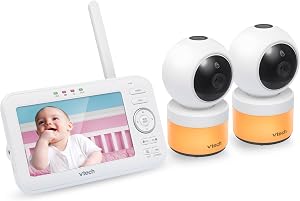
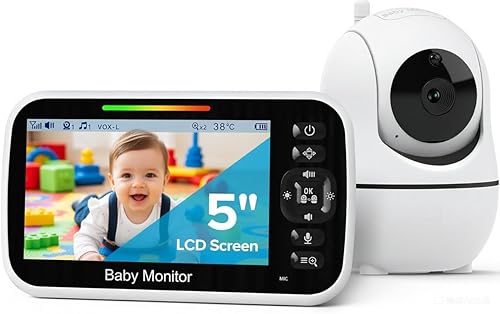
| HelloBaby 5\" 2-Camera (B0C6Y89H47) | No-Wi-Fi, 2 cams included | Already included — activate when twin #2 comes home | Parents who want zero internet dependency |
| HelloBaby 5\" Single Cam (B09GM8JZM9) | No-Wi-Fi, expandable to 4 cams | Yes, pair an extra cam to same parent unit | Buying one now, adding later without re-buying |
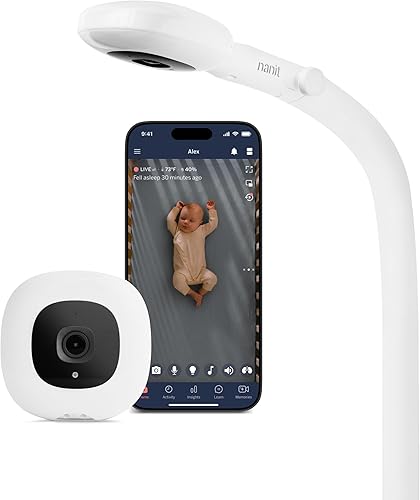
| Nanit Pro (B0FTSL4FXJ) | Wi-Fi, app-based, 1080p | Yes, add a 2nd Nanit Pro to the same account | Tracking sleep, breathing motion, growth on preemies |
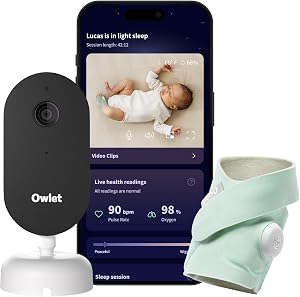
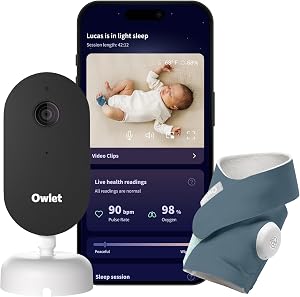
| Owlet Dream Duo Gen 3 (B0FDSHXWYY) | Wi-Fi cam + wearable sock | Yes, buy a second sock/cam | Parents wanting pulse-ox-style reassurance after NICU |
| GoodBaby PTZ (B0GTMC9DS1) | No-Wi-Fi, expandable | Yes, supports multiple cameras | Budget backup or grandparent-house unit |
Top picks for monitoring NICU twins with different discharge dates
1. HelloBaby 5-inch 2-Camera Monitor — best overall for staggered NICU discharges
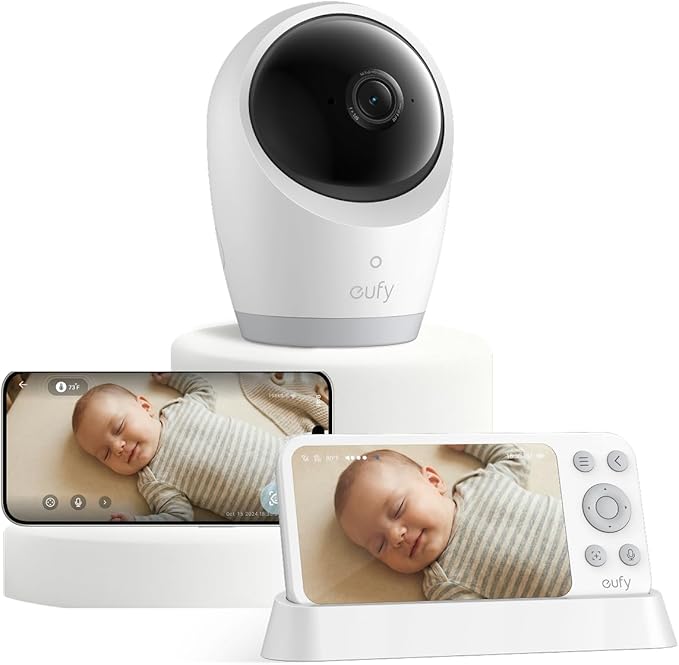
If you only buy one thing on this list, buy a dual-camera bundle now even if Twin B is still inpatient. The HelloBaby 2-camera 5-inch system ships with both cameras in the box, runs on a closed local radio link (no Wi-Fi, no app, no cloud account) and gets up to 30 hours of parent-unit battery on eco mode. For a baby monitor nicu twins staggered discharge household, this matters because you can set up Twin A's camera the day they come home, leave Twin B's camera still sealed, and then plug it in three weeks later without re-ordering, re-pairing through an app, or hoping the same SKU is still in stock. Auto-scan rotates between both feeds every few seconds once both are live, and split-screen on the 5\" display shows both babies at once for night feeds. Check the HelloBaby 2-Camera Monitor on Amazon.
2. Nanit Pro Smart Baby Monitor — best smart monitor for preemie tracking
The Nanit Pro is the pick when you want data — not just video — for two NICU graduates. Mounted overhead on its floor stand, the 1080p camera tracks breathing motion via a Nanit-branded swaddle/band, logs sleep sessions automatically, and ranks sleep against age-adjusted norms (important for preemies, where corrected age matters more than birth date). For staggered discharges, you buy one Nanit Pro now, add a second Nanit Pro to the same account when Twin B comes home, and both feeds live side-by-side in the app under one login. Multiple caregivers (you, your partner, grandparents, the NICU follow-up nurse you trust) can all view independently. The catch: it's Wi-Fi dependent, so a router outage means no monitoring — keep a phone-hotspot backup plan in mind. See the Nanit Pro on Amazon.
3. Owlet Dream Duo (Gen 3) — best for parents wanting post-NICU vitals reassurance
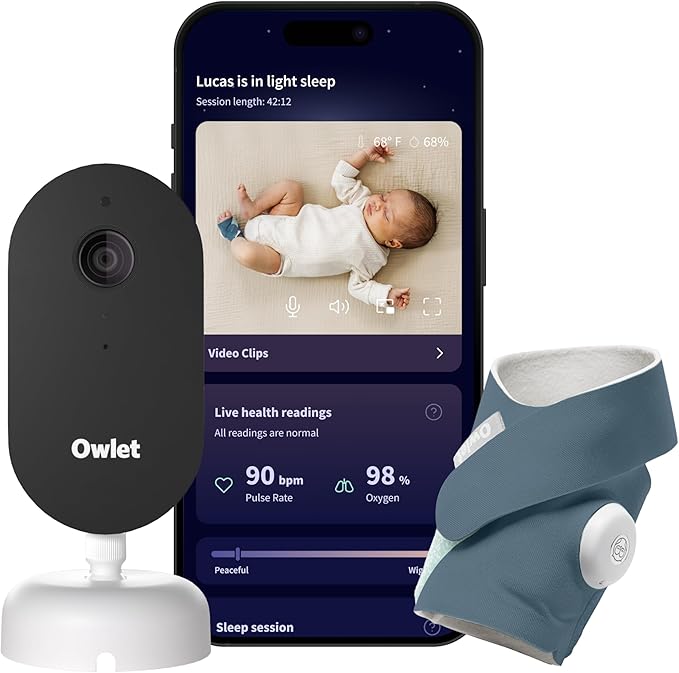
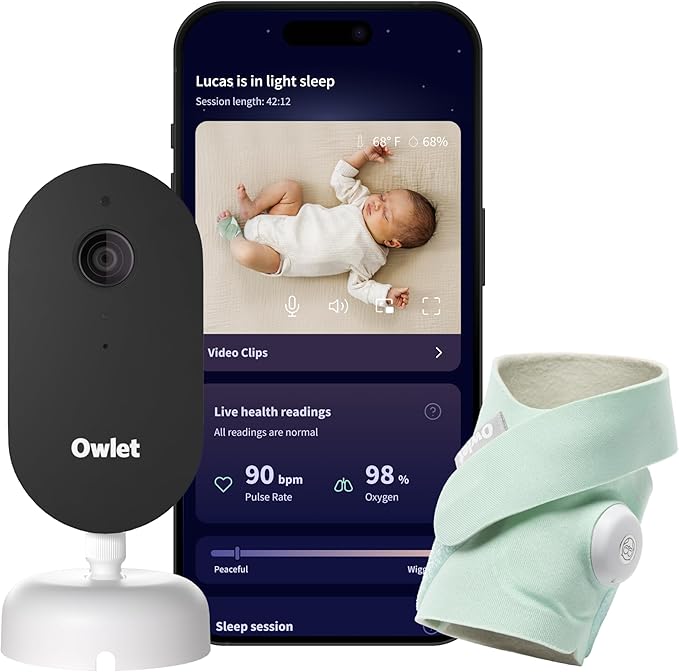
NICU twins often come home after weeks of continuous pulse-ox and heart-rate monitoring. The transition to "just a camera" can feel like a cliff. The Owlet Dream Duo Gen 3 pairs a 2K HD Wi-Fi camera with the Dream Sock, a wearable that tracks pulse rate and oxygen as wellness data (not a medical device, but the closest consumer analog to what your twins had in the NICU). For a baby monitor nicu twins staggered discharge plan, start with one Dream Duo for Twin A, then add a second sock + cam for Twin B — the app handles multiple babies under one profile. Discuss with your neonatologist before relying on any consumer pulse-ox; this is a comfort layer, not a replacement for prescribed apnea monitors. View the Owlet Dream Duo Gen 3 on Amazon.
4. HelloBaby No-Wi-Fi 5-inch Monitor (single cam, expandable) — best budget scalable option
If money is tight after a long NICU stay, the single-camera HelloBaby is the smartest gradual buy. It costs roughly half of the dual bundle, the parent unit supports pairing up to 4 cameras, and the same model SKU has stayed on Amazon for several years — meaning the add-on camera you buy six weeks later will actually pair with the unit you bought today. PTZ remote control, infrared night vision, two-way talk, and 30-hour battery on the parent unit make it a serious option, not just a stopgap. Check the HelloBaby No-Wi-Fi Monitor on Amazon.
5. GoodBaby PTZ No-Wi-Fi Monitor — best backup or second-room camera
The GoodBaby PTZ is the unit we recommend as a secondary camera rather than the primary. It works well when Twin B comes home and sleeps in a different room than Twin A, or as the camera you leave at grandma's house for daycare-style coverage. Pan/tilt/zoom, two-way audio, no internet required, and a price point low enough that buying two doesn't sting. The image quality is a step below Nanit or Owlet, but for a healthy NICU graduate sleeping a few feet from your bed, it's plenty. See the GoodBaby PTZ Monitor on Amazon.
How to set up a monitor when one twin is home and one is still in the NICU
For the gap weeks — Twin A home, Twin B still inpatient — keep the setup simple. Place the active camera over Twin A's bassinet or crib, position it so the lens captures the chest and face (not just the head), and confirm the parent unit or app sends alerts at full volume before you try to sleep. Do a deliberate test on day one: walk to the farthest corner of the house and have someone trigger sound near the crib. NICU-graduate parents tend to over-trust the monitor because they're used to hospital alarms; verify yours actually wakes you.
When Twin B's discharge date firms up, activate the second camera 48 hours before pickup. Test it on an empty bassinet, confirm both feeds appear, and pre-label them in the app or on the parent unit ("Twin A — Liam", "Twin B — Noah") so you don't squint at split-screen at 3 a.m. trying to figure out which baby is crying.
Where the monitor fits alongside medical equipment
If either twin is discharged on a home apnea monitor, pulse-ox, or NG-feed pump, your consumer baby monitor is supplementary — never primary. Medical alarms must be audible from your sleep position; the camera is for visual confirmation ("is she actually struggling or did the lead slip?"). Mount the camera so you can see leads and the pump display in-frame when possible. For more on layering smart-nursery gear, see our guides to the best baby monitor for a preemie coming home from the NICU and Wi-Fi vs. no-Wi-Fi monitors for medically complex newborns.
Frequently Asked Questions
Can I use one baby monitor for NICU twins discharged on different dates?
Yes — and you should plan it that way from the start. Buy a system that already supports two cameras (like the HelloBaby 2-camera bundle) or a Wi-Fi system that lets you add a second camera under the same account (Nanit Pro or Owlet Dream Duo). Don't buy two unrelated single-camera monitors — you'll end up carrying two parent units around the house for the rest of the first year.
Should I buy the second camera before my second NICU twin comes home?
Strongly yes. NICU discharge dates shift constantly — your "two weeks out" estimate can collapse to 48 hours if your baby suddenly passes the car-seat test. Having the second camera unboxed, charged, and pre-paired means one less thing to do during a chaotic discharge day.
Do I need a Wi-Fi monitor or a no-Wi-Fi monitor for NICU twins?
No-Wi-Fi (HelloBaby, GoodBaby) is more reliable, has zero subscription, and won't fail during an internet outage — important if your twins are on home oxygen or feed pumps that already depend on Wi-Fi-connected pulse-ox. Wi-Fi monitors (Nanit, Owlet) give you remote viewing, sleep analytics, and easy sharing with a partner pulling a night shift in another room. Many NICU families end up running both: one no-Wi-Fi as the primary, one Wi-Fi as the data layer.
How do I monitor twin A at home while visiting twin B in the NICU?
This is the strongest case for a Wi-Fi system. With a Nanit Pro or Owlet Dream Duo, you can be at the NICU with Twin B and check on Twin A (sleeping at home with a caregiver) directly from your phone. No-Wi-Fi monitors stay inside the house — they can't help you here. Even one Wi-Fi camera on Twin A's crib bridges the gap during those last weeks of staggered discharge.
Are pulse-ox baby monitors safe to use after NICU discharge?
Consumer pulse-ox products like the Owlet Dream Sock are sold as wellness, not medical, devices. They can offer reassurance, but they are not a substitute for a prescribed apnea monitor or home pulse-ox if your neonatologist ordered one. Always confirm with your NICU discharge team before relying on a consumer wearable for a preemie or medically complex twin.
What's the best monitor placement for twins in separate rooms?
Mount each camera 4–6 feet above the mattress, angled to capture the full crib including the chest. If twins are in separate rooms, make sure the parent unit's audio threshold is set low enough to hear soft preemie cries — NICU graduates often have weaker cries than full-term babies for the first several weeks. For a smart-system review, see our Nanit vs. Owlet comparison for twins.
Should I keep using the hospital-style monitoring habits at home?
Partially. Keep the habit of glancing at the monitor during every feed and diaper change — it builds the visual baseline you'll need to spot a problem. Drop the habit of treating every alarm as critical; consumer monitors false-alarm more than hospital telemetry, and treating each beep as an emergency leads to burnout in week two. For more on the transition, our guide to building a NICU graduate home monitoring checklist covers the first 30 days in detail.
Key Takeaways
- Choosing the right baby monitor nicu twins staggered discharge means matching capacity and output ports to your actual devices
- Always check actual watt-hours (Wh), not just watts — runtime depends on Wh, not peak output
- Also covers: monitor for one nicu twin home one still hospital
- Also covers: nicu twin discharge gap monitor pick
- Also covers: staggered discharge twins breathing monitor
- Compare price-per-Wh across models to find the best value for your budget